
《自律養生實踐家之旅396》 遇見法則
若你曾翻閱一系列關於生命與哲學的書,就會發現,許多書寫生命體悟的文字,雖出自不同的人,卻總帶著相似的疑惑,最後抵達相同的領悟。
法則,就像生命的遊戲規則,與人類制定的法律相似,本質卻不相同。法律由人而立,法則由天而定。
仰望蒼穹,那是天,也是法則。然而,其實無須抬頭,它並不遙遠,天與法則就在我們身邊,更準確的說,就存在於我們的身上。
在人群中,我們感受到秩序的必要。人類世界一旦失去秩序,將迅速墮入混亂與殘酷,甚至失去人性。
犯法者受法律制裁,違規者受校規懲處,而違背法則的人,則要面對法則的教訓。
被法律制裁,尚可上訴;被法則制裁,是否還有申訴的機會?我在安寧病房見過一種答案,也在「身體之道」的世界裡,領悟了另一種。
「人為什麼會生病?」這個問題既能主觀回答,也能客觀分析。一位外國學者曾以此為書名,將疾病的根源歸結於胰島素的失序與失控。
這樣的研究嚴謹、專業,也令人信服;但當你閱讀《為什麼要睡覺》時,會看到另一條疾病的軌跡。
我個人則從「為什麼要斷食」的角度探究病因,那又是一條不衝突、卻截然不同的路。
疾病的解答可以在胰島素,也可以在睡眠,但終究繞不開「食物的生命力」。
熟食,是「人為什麼會生病」的重要線索,為何少有人關注?我認為,是因為缺乏斷食經驗,唯有深入斷食,才能理解熟食的問題所在。
食物一旦煮熟,生命便被奪走;人類長期食用失去生命力的食物,也因此漸漸生病。
這些道理不可能三言兩語說明,必須透過學習、討論,並由斷食去印證。在這些因果背後,隱藏著一條不容侵犯的自然法則,那就是「生物設定」。
所謂生物設定,是內建於我們身體中的自然法則。晝夜節律的存在,早已揭示:睡眠的時間應在夜間,而非白晝。
睡眠議題揭穿了許多人類的創造與發明,人類總愛與時間拔河,也愛與法則較勁,但結局往往是得不償失。
我以「身體即法則」的角度觀察醫療,深入理解藥物的研發邏輯,也看透醫師的處方邏輯,最終發現兩者相互對立、毫無交集。
每一位病者的身上,都可見違逆法則的因果。醫療卻往往將結果誤認為原因,繼續製造更錯亂的循環,這種盲目成了醫病雙方的「共識」。
說真話變得艱難,這是現代世界最可怕的現象。我們活在一個人人習慣沉默、甚至願意共存於謊言的世界。
當你說出真話,有人會不高興;更嚴重時,有人會憤怒。於是,人類世界就在怨怨相報之中,製造出越來越多的疾病與痛苦。
這也是內建於我們體內的另一條關於情緒的法則,你或許見過那些經常動怒、長期憂鬱的人,最終,他們的身體多半不堪負荷。然而,醫療卻極少探討他們真正的病因。
情緒的面向繁多,不生氣是一種修行,不匆忙也是。若詢問法則,它會回答:學習「定靜」與「穩重」。
我從身體的回應中,一次次收到誠懇的告示,一段時間暫離熟食,便是開始傾聽身體語言的方式。
上蒼將自然法則託付給人類維護,而我們若忽略它,就會在疾病中體驗懲罰。「遇見法則」是人生最重要的際遇,也是覺醒的起點。
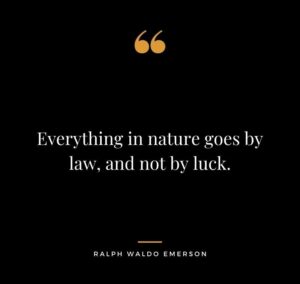
(自然界的一切運行,依循的是法則,而非運氣。)
Encountering the Law
If you have ever read a series of books on life or philosophy, you would notice that writings about life’s insights—though authored by different people—often share the same questions and ultimately arrive at the same realization.
The Law is like the rules of life’s game. It resembles the laws made by humankind, yet in essence, it is entirely different. Human laws are written by people; universal laws are decreed by Heaven.
When we look up at the sky, we see Heaven—and we also see the Law. But in truth, there is no need to look upward; it is not distant. Heaven and the Law exist all around us, and more precisely, within us.
Among people, we sense the necessity of order. Once order collapses, the human world quickly descends into chaos and cruelty, losing its humanity.
Those who break the law are punished by it; those who break school rules are disciplined by the institution. And those who violate the Law of life itself must face the lessons it delivers.
When punished by human law, one may appeal. But when punished by the Law of nature—can one appeal then? I have seen one answer in the palliative ward, and I have realized another through the landscape of The Way of the Body.
—
“Why do people fall ill?”
The question can be answered subjectively or analyzed objectively.
A foreign scholar once wrote a book under that very title, tracing the root of disease to the disorder and loss of control of insulin.
Such a study is rigorous, professional, and convincing.
Yet when you read Why We Sleep, you will discover another trajectory of illness.
I, personally, explored the question from the angle of “Why we fast,” and found yet another path—non-conflicting, but profoundly different.
The causes of disease may be found in insulin, or in sleep, but ultimately, they all circle back to one essential truth: the life force of food.
Cooked food is a crucial clue to why people become sick.
Why, then, do so few care about it? I believe it is because they lack the experience of fasting. Only through deep fasting can one understand what is truly lost in cooked food.
Once food is cooked, its life is taken away.
When humans continuously consume food devoid of life, they too gradually lose vitality and fall ill.
Such truths cannot be conveyed in a few sentences; they require learning, discussion, and the experiential proof that fasting provides.
Behind these chains of cause and effect lies an inviolable natural law—the biological setting.
—
The so-called biological setting is the natural law built into our bodies.
The existence of circadian rhythm has already revealed this truth: the proper time for sleep is night, not day.
The subject of sleep exposes the fragility of human inventions.
Humans love to wrestle with time and to challenge the Law itself, yet the outcome is always a loss greater than the gain.
From the perspective that “the body is the Law,” I have examined medical thinking—delving into the logic behind drug development and the reasoning behind doctors’ prescriptions—and discovered that the two are inherently opposed, never intersecting.
In every patient, we can see the consequences of violating the Law.
Modern medicine, however, often mistakes results for causes, perpetuating an even more chaotic cycle.
This blindness has become a “shared belief” between doctors and patients alike.
To tell the truth has become difficult—this, perhaps, is the most frightening feature of our modern age.
We now live in a world where silence feels safer than honesty, where lies are more comfortable than truth.
—
When you speak the truth, some will be displeased; some will even be enraged.
Thus, the human world, trapped in cycles of retaliation and resentment, continues to create more illness and suffering.
This, too, is a law built into us—the law of emotion.
You may have met those who are easily angered or who live in prolonged sorrow; in time, their bodies tend to fail.
Yet medicine seldom explores the true causes behind their illness.
Emotions have many dimensions.
Not being angry is a form of cultivation; not being hurried is another.
If you were to ask the Law, it would reply: learn stillness and steadiness.
From the body’s silent responses, I have repeatedly received its sincere messages.
Abstaining from cooked food for a time is not deprivation—it is the beginning of truly listening to the body’s language.
Heaven entrusted us with the task of preserving the natural Law.
If we neglect it, we will learn its consequences through illness.
To encounter the Law is one of life’s greatest fortunes—and the true beginning of awakening.


