
《自律養生實踐家之旅402》 自律養生是非典型產業
在真正以系統化方式經營自律養生之前,我的工作就是勸人斷食。理解的人不多,願意做的人更是少之又少。
我從不在意有多少人願意做,畢竟,斷食是一條做了才會懂的身體之道。只要願意踏上這條路,總有一天會領悟斷食那份不可替代的價值。
若把養生視為一項合夥事業,唯一的合作對象一定是自己的身體。你可以把身體當股東,也可以讓身體當老闆。
我的經驗是:當事業穩定了—也就是斷食成為你的日常—你會心甘情願把「負責人」的位置交給身體。這一步,正是確保事業成功的關鍵。
自律養生是一項工程級的工作,若不能系統化,就無法成立;若無法聚集一群理念一致的人,也註定走不遠。而若這個組織的方向不是利他,它更不可能被傳承。
我靠寫書傳遞理念,能被影響的是極少數中的少數。收入與支出的落差極大,我很早就明白:只能靠負債累積實力。
俗話說:「戲棚下站久了就是你的」,但站得久需要承擔,而要站多久,沒人說得準。對我而言,這工程的結局,我早已交給天安排。
在戲棚下,不能只是發呆。若無法擴大自己的影響力,身體之道的推廣必然卡關,每一階段都得檢視自己是否維持在進步狀態。
當我持續記錄「人為什麼會生病」,走在身體之道的深處時,我看到的是與以往完全不同的視角。這些看見細緻到難以剖析,我只能感謝自己的身體始終給我精準的回應。
一邊記錄心得,一邊備課,一邊與學員面對面交流,也不斷思考:這件工程要如何更有系統、更方便的傳給願意學習的人。
因為自律養生所教的內容,不存在於任何既有產業;它不是買賣事業,也不是開門市供人參觀,更不能寄望靠國外市場來成就。
若有一天自律養生能企業化,那必然是:有一群懂身體之道的人,在各地回應影響圈的好奇心。
他們靠的不是口才,而是自己的身體展現出不同的狀態。
許多人覬覦中國市場,那曾是我與早期戰友試圖攻城掠地的地方。但只看利潤、忽略動機教育的商法,結局一定是滑鐵盧。
因此,自律養生不能複製傳統商業模式。獲利固然必要,但真正的地基是教育、學員的認同、學員的歸屬感,這三者缺一不可。
走過十多年,我體會了成為斷食教練的「承擔」與「不承擔」。至於是否能走到國際、能否跨國複製,我把決定權交給老天。
我真心希望有一天能向外國人介紹台灣的獨特斷食體驗,也希望台灣人在斷食中觀察到的「生病軌跡」能被國際看見。
然而,思考市場的本質,我得到的答案很簡單:自律養生的根在台灣。
酵素斷食的素材與智慧,源自台灣這片土地。利他的版圖,就該從這片寶島生長。
我希望幫助台灣人收復身體失去的土地,也希望協助台灣人修補身體破損的土壤。這是身體才能完成的工程,也是斷食才能達成的規格。
談市場就會談到人脈,在底層邏輯漸漸成為一種思考模式的今天,人脈也必須重新定義。
你認識的人,多半對斷食不感興趣。因此我們重新定義:人脈,是你能幫助的人。
人脈,是那些真正相信你、願意支持你的人。
在職場上,人脈常被理解為「我認識某某人」。但在人生格局與典範的層次,「人脈」真正的含義其實是:有多少人認識你,有多少人願意幫助你。
自律養生要做的,是務實的幫助那些願意與身體和解的人;而他們回饋的能量,將支持自律養生繼續往前走。
從人生的角度,我最粗淺的哲學思考是:「我們都是前來為他人服務的」。自律養生能否站穩腳步,關鍵在於它能喚醒多少人的身體意識。因為人都需要被提醒,人需要被鼓勵,人也需要被激勵。
而人生有一件既重要又簡單的事:讓身體當家,讓身體當老闆,讓最有能力把健康做好的單位去做它最擅長的事。
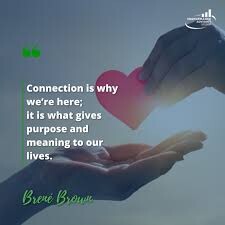
(連結,是我們之所以存在的原因;它讓生命擁有目的,也賦予生命意義。)
Selfasteam: An Atypical Industry
Before I began managing Selfasteam in a truly systematic way, my “job” was simply persuading people to fast. Few understood it, and even fewer were willing to do it.
I never cared how many people were willing to try. Fasting is a path that only makes sense once you begin walking it. If you dare step onto this road, you will one day realize its irreplaceable value.
If we regard wellness as a partnership business, the only true partner is your own body. You may treat your body as a shareholder, or you may let it be the CEO.
My experience is this: when the “business” stabilizes—when fasting becomes your daily life—you will gladly hand the leadership position over to your body. That is the key step that determines whether the business succeeds.
Selfasteam is an engineering-level project. Without systemization, it cannot stand; without gathering people who share the same conviction, it cannot go far. And if its direction is not rooted in altruism, it cannot be passed on.
I spread my philosophy through writing, but the number of people who can be influenced by books is extremely small. The gap between income and expenses was enormous; very early on, I realized that the only way to build capability was to accumulate strength through debt.
There is a saying: “Stand long enough under the opera shed, and the stage will eventually be yours.” But standing there requires endurance, and no one can tell you how long you must stand.
To me, the outcome of this engineering project has long been entrusted to the heavens.
But you cannot simply stand idly under the shed. If you cannot expand your influence, the promotion of the Way of the Body will inevitably stall. At every stage, I must examine whether I am still progressing.
As I continued documenting “Why humans fall ill,” and walked deeper into the Way of the Body, I began to see from a completely different vantage point. What I saw was so subtle it defied analysis; all I could do was thank my own body for its precise responses.
While documenting insights, preparing lessons, and conversing face-to-face with students, I kept thinking:
How can this engineering project be taught more systematically, more accessibly, to those who are willing to learn?
Because what Selfasteam teaches does not exist in any existing industry. It is not a business of buying and selling. It is not a storefront for visitors. Nor can it rely on foreign markets for success.
If one day Selfasteam becomes a true enterprise, it will be because a community of people who understand the Way of the Body are responding to the curiosity within their circles of influence across different regions.
Their strength will not come from eloquence, but from the unmistakable state of their own bodies.
Many people covet the Chinese market. That was once the place where my early comrades and I attempted to conquer territory. But any business that chases profit while neglecting motivation and education is destined for a Waterloo.
Thus, Selfasteam cannot replicate traditional business models. Profit is necessary, of course, but the true foundation is education—along with students’ recognition and students’ sense of belonging. These three elements are non-negotiable.
After more than a decade, I have learned the “burdens” and “un-burdens” of becoming a fasting coach. As for whether this can expand internationally or be cross-border replicated, I leave that decision to the heavens.
I sincerely hope that one day I can introduce Taiwan’s unique fasting experience to the world, and that the “patterns of illness” observed by Taiwanese people through fasting can be seen internationally.
Yet when I reflect on the essence of “market,” the answer becomes simple:
The root of Selfasteam is in Taiwan.
The materials and wisdom of enzyme fasting were born from this land. An altruistic mission should grow from the soil of this island.
I hope to help Taiwanese people reclaim the territories their bodies have lost, and to help repair the damaged soils within their bodies. This is a project only the body can complete, and a specification only fasting can fulfill.
When we talk about the market, we inevitably talk about networks. In an era where first-principles thinking has become a common mode of thought, “network” too must be redefined.
Most of the people you know have little interest in fasting.
So we redefine “network”:
A network is the group of people you are able to help.
A network is the group of people who truly believe in you and genuinely support you.
In the workplace, “network” is often understood as “I know so-and-so.” But in the dimension of life worldview and paradigm, its true meaning is:
How many people know you? How many people are willing to help you?
What Selfasteam must do is help—practically and sincerely—those who are willing to reconcile with their own bodies. And the energy they return will carry Selfasteam forward.
From the perspective of life, my simplest philosophical conclusion is this:
We are all here to serve others.
Whether Selfasteam can stand firmly depends on how many people’s bodily awareness it can awaken. People need reminders. People need encouragement. People need inspiration.
And in life, there is one thing that is both important and simple:
Let the body be the master.
Let the body be the CEO.
Let the one unit most capable of restoring health do what it does best.


