《自律養生實踐家之旅403》 擁有,是人生最大的失策
我們每個人都是背著書包踏進人生這座校園,書包裡放著重要的提示,只是我們忘了書包的存在,也忘了裡面其實收藏著自己早就寫好的筆記。
既然人生如校園,我們都帶著學習的意圖,也知道學習是此行的功課;書包裡註記著那些必修的科目,而旁人對我們最深的印象,往往來自那些「該修卻沒修好」的課。
「江山易改,本性難移」說的,就是那份跨越不同身軀、不斷循環的習性。
我們常嚮往痛改前非,卻總是忘了自己曾對自己許下的願望,也忘了曾慎重締結的承諾。
失敗過的人渴望成功,貧窮過的人嚮往富有;而成功與富裕總是遙不可及。路上看似都是障礙,但我們第一時間想到的從不是自己的過失,而是別人。
我在身體不好的人身上看見一種特質,叫做「別人的錯」。相對的,身體好的人往往具備另一種特質:「我的承擔」。
如果承擔是健康的起點,那麼當年書包裡一定曾經記載這樣的提醒,我們或許提醒過自己要承擔,也可能早就知道承擔是健康的修行,只是一路遺忘。
只要看見一個需要他人攙扶的人,看見一個無法自理生活的人,就該理解:那就是承擔的拖延,因為健康已經被拖延。代表我們沒有及時修練承擔,也沒有提前好好照顧自己。
我們的生活環境長久存在一種氛圍:幾乎所有人都把自己提早交出去,健康交給醫生、病痛交給醫院。
既然承擔可以轉移,承擔的空缺,往往被「擁有」填補。我們以為金錢能買到承擔、能換到安全感,能填補那些原本該靠自己修復的匱乏。
我在失去健康的人身上,看見另外一種特質:害怕失去。相對的,在擁抱健康的人身上,我看見的卻是:願意分享擁有。
最簡單的詮釋就是:不健康的人比較不大方;健康的人比較大方。
仔細體會「人盡其才、地盡其利、物盡其用、貨暢其流」的本質,感受到均衡,也領悟到大方;在我生命的經驗裡,就是寬容並且給人方便。
斷食能連結健康,因為它觸發了身體最清晰的指令:先出去,才能進來;先移除囤積,才能順暢流動。
這是身體的智慧,也是自然法則的提醒。
我們是否佔有了太多不該屬於自己的東西?身體之所以囤積,是不是因為我們塞進了太多不該存在於身體的物質?
我們都有共同的經驗:明知道不能再吃,卻仍抵擋不了慾望。吃的背後是一種佔有慾,是物慾,也是貪婪。
身體內建自然法則,我們和身體早就建立了「遠離越多越好」的共識,或許我們都體會過:生病往往源自違背「越多越好」的事實。
自然法則中是否真的存在「越多越好」?看看生命走到盡頭、健康被徹底奪走的人,那些能坦然說出「什麼都不要了」的人,最能理解「越多越好」是多麼荒謬。
佔有容易帶來衝突,也常是感情糾紛的核心戰場;有人因佔有失去健康,有人甚至因此失去生命。
情緒與病痛之間有綿密關係,「擁有」與「病痛」之間更是難以切割。當我們誤用「擁有」、強化「佔有」,是否同時在為失去健康鋪路?
老闆是否真的「擁有」員工?丈夫是否真的「擁有」妻子?人似乎並不能真正擁有人,這正是許多紛爭與案件的根源。
我們也想佔有空間、佔有時間。承租一個空間,就得付出對應的時間成本;空間有價、也可以無價;時間有價、也可以無價。
關鍵不在於空間與時間,而在於你是否擁有健康的身體。
佔有,總要面臨失去;而擁有,往往成為負擔
當我心中有愛,當我內心有願意給愛的對象,我願意把那些看似難以割捨的「擁有」毫不保留的給出去。
因為我知道,那不是真正的擁有,那只是短暫的佔有與享有。
我們真正擁有的,是愛,我們能攜帶到下一個生命去處的,也是愛,我們能無止盡給予的,是愛,能無償得到的,也只有愛。
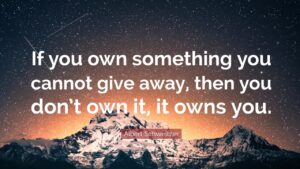
(如果你擁有的某樣東西無法割捨,那麼真正的情況不是你擁有它,而是它擁有你。)
Possession: The Greatest Misjudgment in Life
We each enter the schoolyard of life carrying a backpack. Inside it are important reminders, yet we forget the backpack exists, and forget that it holds notes we wrote for ourselves long ago.
Since life itself is a school, we come with the intention to learn, knowing that learning is the true assignment of this journey. And inside that backpack lie the compulsory subjects we must take—subjects that shape the impressions others have of us, especially the classes we “should have completed but never mastered.”
“There’s no changing a person’s nature,” the old saying goes.
It speaks of those ingrained tendencies that migrate from one lifetime to the next.
We often long for transformation, yet repeatedly forget the vows we once made to ourselves and the promises we once sealed with sincerity.
Those who have failed yearn for success; those who have tasted poverty long for abundance.
Yet success and prosperity always seem distant. The road feels full of obstacles, but the first thing we blame is never our own shortcomings—it is always someone else.
Among those with poor health, I often see one defining trait:
“It’s someone else’s fault.”
In contrast, those who enjoy good health tend to embody a different trait:
“I take responsibility.”
If responsibility is the starting point of health, then the reminder must have been written in the backpack long ago.
Perhaps we once told ourselves to take responsibility; perhaps we always knew responsibility was the foundation of wellness—but simply forgot along the way.
—
Whenever we see someone who needs support to walk, or someone no longer capable of caring for themselves, we should understand:
that is the cost of delayed responsibility—health delayed is responsibility delayed.
It means we did not practice responsibility in time, nor did we take care of ourselves when we still could.
Our environment has long cultivated a certain atmosphere:
most people hand themselves over too early—health to doctors, illness to hospitals.
When responsibility can be outsourced, its vacancy is quickly filled with “possession.”
We begin to believe that money can buy responsibility, buy security, buy the patch for a wound only we were meant to heal.
Among those who have lost their health, I see another recurring trait:
fear of losing.
Among those who embrace health, I see the opposite:
a willingness to share what they have.
The simplest way to describe this is:
the unhealthy tend to be less generous; the healthy, more generous.
If we meditate on the essence of the old principle—
“Let talent be used, let land be productive, let things serve their purpose, let goods flow freely”—
we find balance, generosity, and in my life’s experience, tolerance and a willingness to make things easy for others.
—
Fasting and the True Meaning of Letting Go
Fasting brings us back to health because it activates the body’s clearest command:
first release, then receive; first remove what is stagnant, then restore flow.
This is the body’s wisdom—and nature’s reminder.
Have we accumulated too much that should never have been ours?
Is the body’s “storage” merely the result of us forcing into it what never belonged there?
We all share a similar experience:
knowing we should not eat more, yet unable to resist the desire.
Behind eating lies the impulse to possess—material desire, or simply greed.
If the body is designed according to natural law, then we already share with it a silent understanding:
“more” is not always better.
Perhaps we have all learned the hard way that illness stems from violating this truth.
Does “the more, the better” truly exist in nature?
Look at those approaching the end of life, whose health has been entirely stripped away—
the ones who can calmly say, “I don’t need anything anymore.”
They understand better than anyone how absurd the idea of “more” truly is.
—
Possession Breeds Conflict; Ownership Becomes Burden
Possession often leads to conflict and is frequently at the center of emotional turmoil.
Some lose their health because of possession; others lose their lives.
Where there is a deep link between emotions and illness, there is an even more inseparable bond between “ownership” and pain.
When we misuse ownership—when we amplify possession—are we not laying the groundwork for the loss of health?
Does a boss truly “own” employees?
Does a husband truly “own” his wife?
Humans cannot truly own other humans—
and this is precisely the root of countless disputes and tragedies.
We also try to possess space and time.
To rent a space is to pay with units of time;
space may have a price, or may be priceless;
time may have a price, or may be priceless.
But the deciding factor is never space or time—
it is whether you possess a healthy body.
Possession always foreshadows loss.
And what we “own” so tightly often becomes the very burden we carry.
—
The Only Thing We Truly Own Is Love
When my heart is full of love, when I have people to whom I wish to give love, I offer them what seems impossible to part with.
Because I know that none of it is real possession—
it is only temporary holding or temporary enjoyment.
In the end, I realized:
The only thing we truly own is love.
What we can carry into the next life is love.
What we can give endlessly is love.
And what we can receive without cost—
is also love.


