
《自律養生實踐家之旅409》 新時代警悟
只要走進任何形式的講座現場,總能看見為數可觀的學習者。表面上,這似乎是一股推動社會進步的力量;然而,從我長期的教學經驗中,卻清楚看見這股學習風潮背後的巨大缺口。
多數人的狀態,是忙碌、焦慮,並且急切渴望改變。然而,每個人每天都只有二十四小時。學習的內容即使一度進入記憶,也往往只在大腦中短暫停留,最終在某個夜晚的睡眠裡,被大腦自然清除。
當知識無法轉化為生活的一部分,它就只是知識,而且是生命中零碎、短暫、無法累積的知識。回頭細數我們追逐生命價值的軌跡,會發現自己徒然耗費了太多寶貴的人生。
這種現象的背後,其實隱藏著動機的謬誤。社會教育長期引導我們追逐「多、有、贏」,於是我們在大腦中不斷堆積知識與慾望,卻同時犧牲睡眠、透支健康,最終留下徒呼負負的人生。
真正重要的事情,往往被忽略了,因為價值教育並不存在於我們所處的環境之中。從事養生教育的經驗裡,我深刻感受到線性思考的全面蔓延,人們熱衷於紙上談兵,卻忽略了實證與實踐。
這樣的覺醒,同時提醒自己必須在工作、肌肉鍛鍊與生活調適之間,找到最適切的平衡,這其實也是「先刮自己鬍子,還是先刮別人鬍子」的優先順序問題。
每當我們開始對自己產生檢討的聲音時,不妨先回到動機本身:這個行為或選擇,是來自他人的意見誘導,還是出於自己的決定?是為了獲得,還是為了付出?
這正是動機的源頭,是外在需求,還是內在滿足;是私心在擾動,還是人性的本質在驅動。
不能忘記的是,做決定的人是自己,承擔的人,也只能是自己。所謂的承擔,不只是承受結果,也不僅是負起責任,而是源自內在動機的那份誠意與決心,讓事情走向更圓滿的方向。
自己的角色、自己的人生、自己的健康、自己的事、自己的承擔。當我們審慎回顧人生的軌跡,最終能理清的,往往只剩下一個關鍵詞:「自己」。
解構「自己」的存在,並不是為了將它放大,而是為了縮小它。只要深入任何一場人際衝突,就不難發現過度放大自我的存在,這樣的人往往多了侵犯,少了同理。
順著這條思路,我們再將「醫療」填入自己的角色之中,便會看見一個更嚴峻的問題。這個角色不僅被過度放大,甚至已經侵入人權,剝奪生命的自主性,進而製造出文明世界的健康災難。
為何稱之為災難?因為大多數人毫無警覺,且越陷越深。中老年族群幾乎人手一把藥物;人群之中,談論的不是門診就是回診;病友之間交流的,不是「醫生說」,就是「有效說」。
如果你有下一代,不妨想一想他們的未來:是擁有豐盛生命,還是病痛纏身?這兩條道路不會交會,也無法並存。
當一切變得混亂不清時,我們必須再次把焦點拉回動機本身。《動機:單純的力量》一書中提到「行為本身的內在滿足」,初次聽來或許顯得抽象,卻是對內在動機最精準的詮釋。
因應促銷而產生的購買行為,是外在動機;出於熱情而投入助人的行動,來自內在動機。
有利於荷包與有利於健康,走的是兩條截然不同的行徑軌道。
因企業福利而參與健檢,是外在動機;順應身體需求而主動養生,源自內在動機。被告知檢查結果與全然信任身體,是兩個完全不同世界的思維模式。
然而,回到自己的承擔和自己的人生,似乎現實狀況都不是這麼一回事。別人的價值與權威主導了我們的選擇,我們成為他人的附庸,而自己只剩下一具軀殼。
既然我們都在乎健康,也關心生命品質,那些習以為常的「不知道」與「不確定」就必須被校正。生病了,要知道原因;失敗了,要釐清因果。
做任何事情之前,都應該清楚「為什麼要做」。我們不會輕易坐上酒駕者的車,也不會執意前往戰亂中的國家旅行;然而,不知道病因就接受治療,卻被視為理所當然。
不知道你為何生病的人在為你治療,這是多麼可怕的事。就像兩個各懷目的的人結為夫妻,彼此並不相愛,結局注定難以圓滿。
時代持續翻新,當你的工作被取代的風險愈來愈高,真正該思考的,不再是迎合他人的需求,而是建立屬於自己的價值。
我們每個人,都擁有一具完全自主的身體。要認識身體,就必須理解它的原始設定,那是依據晝夜節律與自然法則而存在的生命設計。
當我們真正理解這些設定,便會自然生出向身體學習的意願。我們可以向身體學會自主與承擔,進一步領悟敬畏與包容。
最高意識與身體不斷提醒我們:我們處在一個無所遁形的世界之中。
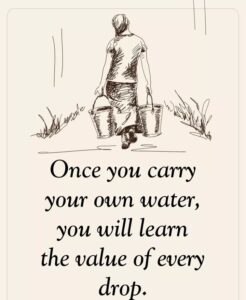
(當你開始自己扛水時,你才會真正明白每一滴水的價值。)
Awakenings of a New Era
Whenever one steps into any kind of lecture or seminar, a sizable crowd of learners is almost always present. On the surface, this appears to be a force driving social progress. Yet through years of teaching, I have clearly seen the vast void hidden behind this learning frenzy.
Most people live in a state of busyness and anxiety, urgently longing for change. Yet each of us has only twenty-four hours in a day. Even when new knowledge briefly enters memory, it often lingers only momentarily before being naturally erased by the brain during sleep.
When knowledge cannot be transformed into lived experience, it remains mere knowledge—fragmented, fleeting, and incapable of accumulation. Looking back on the paths we have taken in pursuit of life’s value, we often discover that we have squandered far too much of our precious time.
Beneath this phenomenon lies a fundamental fallacy of motivation. Social education has long guided us to pursue “more, possession, and winning.” As a result, we pile up knowledge and desire in our minds while sacrificing sleep and overdrawing our health, leaving behind lives filled with regret and futility.
What truly matters is often neglected, because education in values scarcely exists in the environments we inhabit. From my experience in wellness education, I have deeply felt the pervasive spread of linear thinking—people delight in theoretical discussion while neglecting verification and practice.
This realization also reminds me that one must find the most appropriate balance between work, physical training, and daily life adjustment. At its core, this is a question of priority—whether to shave one’s own beard first, or someone else’s.
Whenever the voice of self-reflection arises, it is worth returning to motivation itself: Does this action or choice come from the influence of others’ opinions, or from one’s own decision? Is it driven by the desire to gain, or by the intention to give?
This is the very source of motivation—external demand or inner fulfillment; private interest stirring within, or the deeper drive of human nature.
What must not be forgotten is this: the one who makes the decision is oneself, and the one who bears the consequences can only be oneself. To bear responsibility is not merely to endure outcomes or shoulder duties; it is the sincerity and resolve that arise from inner motivation, guiding matters toward a more complete and harmonious end.
One’s role, one’s life, one’s health, one’s affairs, one’s responsibility. When we carefully review the trajectory of our lives, what ultimately remains is often a single keyword: oneself.
To deconstruct the notion of “self” is not to enlarge it, but to reduce it. Enter any interpersonal conflict deeply enough, and it becomes evident that those who overinflate their sense of self tend to invade more and empathize less.
Following this line of thought, when we insert “medicine” into our sense of self-role, an even graver issue emerges. This role has not only been excessively magnified, but has encroached upon human rights, stripped life of its autonomy, and ultimately produced a health catastrophe within the civilized world.
Why call it a catastrophe? Because most people are unaware—and sink ever deeper. Among middle-aged and older populations, medications are almost universal; conversations revolve around clinic visits and follow-ups; exchanges between patients are filled with “the doctor said” or “this works.”
If you have children, consider their future: a life of abundance, or a life bound by illness? These two paths do not intersect, nor can they coexist.
When everything becomes confused, we must once again bring our focus back to motivation. The book Drive: The Surprising Truth About What Motivates Us speaks of “the intrinsic satisfaction of the activity itself.” It may sound abstract at first, yet it is the most precise explanation of inner motivation.
Purchases triggered by promotions arise from external motivation; acts of helping others driven by passion come from inner motivation.
What benefits the wallet and what benefits health follow entirely different trajectories.
Participating in health screenings due to corporate benefits is external motivation; practicing wellness in response to bodily needs arises from inner motivation. Being informed of test results and fully trusting the body represent two completely different ways of thinking.
Yet when we return to our own responsibility and our own lives, reality often tells a different story. The values and authority of others dominate our choices; we become appendages to others, while we ourselves are reduced to little more than empty shells.
Since we all care about health and the quality of life, those habitual states of “not knowing” and “uncertainty” must be corrected. When illness arises, we must understand its cause; when failure occurs, we must clarify its chain of causation.
Before doing anything, one should be clear about why it is being done. We would not casually ride in a car driven by someone intoxicated, nor insist on traveling to a war-torn country. Yet accepting treatment without knowing the cause of illness is widely regarded as perfectly normal.
To be treated by someone who does not know why you are ill—this is a terrifying thought. It is like two people with different intentions entering marriage without love; the outcome is destined to be incomplete.
As times continue to change and the risk of one’s work being replaced grows ever higher, what truly deserves reflection is no longer how to meet others’ demands, but how to build one’s own value.
Each of us possesses a body that is fully autonomous. To know the body, we must understand its original design—a living system structured around circadian rhythms and the laws of nature.
When we truly comprehend these settings, the desire to learn from the body naturally arises. From the body, we can learn autonomy and responsibility, and further come to understand reverence and compassion.
Higher consciousness and the body alike keep reminding us: we live in a world where nothing can remain hidden.


