
《自律養生實踐家之旅411》 沒有人因病而死:習性、執著、死亡
我在父親辭世的現場,讀懂了他最後的告白。
那不是語言,而是從眼角滑落的淚水,是心跳拉成一直線之後,臉上浮現的神情。我們看到的是安詳,而他真正表述的,是解脫。
對照他臥床的最後三個月,我不曾看過他露出一絲笑容。那是一種必須仰賴嗎啡才能勉強壓抑的疼痛,是一具身體內早已盤根錯節、無法再承載的痛苦。
父親屬於台灣日據時代的知識份子,為了考醫科,他離家前往台南念高中,背負著嚴父對他的期許,最終考進帝國大學醫科。
他的一生,至少有兩個版本:一個是外人眼中的名醫,一個是身為子女的我們所看見的父親。
我的姐姐和弟弟不像我這樣鑽研疾病,他們和多數人一樣,用線性的方式理解生病與死亡的關係,很慶幸我選擇了不會遺憾的生命道路。
身為醫師,父親在私生活中彷彿擁有「不必做任何家事」的特權。中年以後,清晨外出活動多半由母親主動要求;坐著、躺著,是他留在我們記憶中最鮮明的畫面。
父親從苦讀到成為地方名醫,這段歷程讓我領悟到一個殘酷卻無法否認的事實:富足,讓他停止進步;成功,加速醞釀他身體的敗壞。
人往往會主動固守那些自己清楚有缺失的習性,因為還不夠痛,因為自認為還年輕,因為不知道身體正在一點一滴堆疊傷害。
換個角度看,還有另一種更隱微的原因:因為位高權重,因為只要動嘴、不必動腦,因為世界似乎都圍著他運轉。
我曾記錄過妻子一種在多數人眼中「可以接受」的行為:吃剩菜。那些反覆進出冰箱、再加熱的隔夜菜,有時甚至放了好幾天。在「節省」這把保護傘下,身體被當成廚餘桶的行為,顯得理直氣壯。
她的出發點只是節省,認為「還能吃的就是食物」。即便知道我十分介意,她也沒有真正改變,只是選擇在我不在家的時候進行。
父親與妻子,都是我最親近的人,我親眼看過他們的死亡證明書。那張紙上最重要的一欄是「死亡原因」,但醫師所填寫的內容,在我的認知中,幾乎毫無意義。
這正是所有真心想照顧好自己身體的人,必須建立的視角:死亡,是累積的結果;
那一刻,只是結束,真正該被檢視的,是過程中那些不斷耗損生命的習性。
讓我試著從反向的路徑,解釋「人為什麼會生病」。
請從一個人生命終止的那一刻往前追溯,先進入他的生命價值:他的所作所為,是否出自自己的意願?是否活得快樂?這些答案,往往可以從最親近他的人身上得知。
「做自己」不只是修行的課題,更是健康的課題。這正是人類病痛分析中最大的迷宮,也是距離醫療視角最遙遠的地方。
進一步檢視那些為錢做事、卻無法說真話的場域;從家庭到社會的人權死角;再到醫療權威中那些不容質疑的思考邏輯。
你會發現,病,往往是人親手製造出來的產品。
接著,應該檢視死者生前服用了多少年的藥物。即便不是長期使用慢性病藥物,看他是否也依賴藥物解決睡眠與疼痛。
「特效」本身就是一種荒謬的動機;但換個角度,它卻是一種極其成功的行銷。
瘦瘦針只是當今社會的縮影,類似的研發與銷售,早已吞噬了無數珍貴的生命。
法則之中,從來沒有「快速有效」,也不存在「一勞永逸」。
我父親的生命裡,清楚刻著前者的鑿痕;而他行醫後段的態度,則浮現出後者的陰影。依賴藥物入睡,也是他逐步遠離健康的重要原因。
吃藥成了一種民間默契,而生病也就順理成章成為理所當然。
我能在多數死亡個案中,追溯到一段長期輕視睡眠的人生。這是現代人最難戒除、卻極具破壞力的致病行為。沒睡好覺,牽連的不只是情緒與人際關係,還包括高速公路上的事故與一生的後遺症。
情緒牽動免疫系統,憤怒侵犯內分泌系統,兩者持續影響睡眠品質,而睡眠失衡又再製造更糟的情緒與關係,最終累積成一條失控的疾病軌跡。
生病,從來不只是惡性循環那麼簡單。人格特質,會在每個人身上刻下難以抹滅的印痕,特別是那些容易暴怒、又習慣把委屈藏起來的人。
因此,我始終把養生視為一種生命修行。
文章的結尾,必須回到「吃三餐」這個看似微小、卻牽涉極廣的議題。這裡,人性佔了極大的比重,最終仍然回到對習性的執著。
人類最難駕馭的兩件事,正好適合作為結尾:不認錯,與不願改變。
若要在死亡證明書上,寫下一個最貼近真相的原因,我的淺見是:「執著」,或許「頑固」更接近事實。
台灣民間那句話:「死人個性」,真的不是隨便說說的。
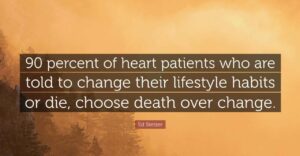
(有九成的心臟病患者,在被告知若不改變生活習慣就可能喪命時,仍選擇死亡,而不是選擇改變。)
No One Dies of Illness: Habit, Attachment, and Death
At the moment of my father’s passing, I finally understood his last confession.
It was not spoken in words.
It revealed itself in the tears that slid from the corners of his eyes, in the expression that surfaced after his heartbeat stretched into a straight line. What we saw was serenity; what he truly expressed was release.
Looking back at the final three months of his bedridden life, I cannot recall seeing even the faintest smile. His was a pain that could only be barely suppressed by morphine—a suffering that had already become too deeply entangled within the body to be borne any longer.
My father belonged to the generation of intellectuals shaped during Taiwan’s Japanese colonial era. In pursuit of medical school, he left home to attend high school in Tainan, carrying the heavy expectations of a strict father. In the end, he was admitted to the medical faculty of the Imperial University.
His life existed in at least two versions:
one was the renowned physician seen by the public;
the other was the father we, his children, knew.
My sister and brother never studied disease as I did. Like most people, they understood illness and death through a linear framework. I am grateful that I chose a life path that leaves me without regret.
As a physician, my father seemed to possess an unspoken privilege in his private life: exemption from household responsibilities. After middle age, even his early morning outings were usually initiated by my mother. Sitting and lying down are the images that remain most vividly in our memory of him.
From his years of hardship and study to his rise as a respected local doctor, I came to recognize a harsh but undeniable truth:
prosperity halted his growth;
success accelerated the deterioration of his body.
—
People often cling deliberately to habits they know are flawed—because the pain is not yet severe enough, because they believe they are still young, because they are unaware that damage is accumulating in the body, layer by layer.
From another angle, there is an even subtler reason: status, authority, the luxury of speaking without thinking, the illusion that the world revolves around them.
I once documented a behavior of my wife’s that most people would deem “acceptable”: eating leftovers. Food that went in and out of the refrigerator, reheated repeatedly—sometimes kept for several days. Under the protective umbrella of “being economical,” treating the body like a garbage disposal became a justified act.
Her intention was simple: saving money. To her, “food that can still be eaten is food.” Even though she knew how strongly I objected, she did not truly change—she merely chose to do it when I was not at home.
My father and my wife are the two people closest to me. I have personally seen their death certificates. The most prominent line on that document is “cause of death,” yet what physicians write there is, in my understanding, nearly meaningless.
This is the perspective that anyone who genuinely wishes to care for their body must develop:
death is the result of accumulation.
That final moment is merely the end; what truly deserves scrutiny is the long process of habits that continuously deplete life.
—
Let me try to explain why people become ill by taking the reverse path.
Begin at the moment a life ends, then trace backward into that person’s values: Were their actions driven by their own will? Did they live with joy? The answers are often known best by those closest to them.
“Being oneself” is not only a spiritual discipline; it is a health issue. This is the greatest labyrinth in the analysis of human illness—and the point farthest removed from the medical gaze.
Then examine the environments where people work for money yet cannot speak truthfully; the blind spots of human rights within families and society; and the unquestionable logic embedded in medical authority.
You will discover that illness is often a product manufactured by human hands.
Next, look at how many years the deceased consumed medication. Even if they were not long-term users of chronic prescriptions, consider whether they relied on drugs to manage sleep or pain.
—
The very notion of a “miracle cure” is absurd—yet from another perspective, it is extraordinarily successful marketing.
Weight-loss injections are merely a contemporary symbol; similar research and sales strategies have already consumed countless precious lives.
Within natural law, there is no such thing as “fast and effective,” nor does “once and for all” exist.
My father’s life bore the clear marks of the former, while the latter cast its shadow over his later years of medical practice. His dependence on medication to fall asleep was also a significant step away from health.
Taking pills became a social tacit agreement, and falling ill naturally followed as an accepted consequence.
In most death cases, I can trace a long life marked by disregard for sleep. This is one of the most destructive yet hardest habits to abandon in modern society. Poor sleep affects not only emotions and relationships, but also highway accidents and lifelong consequences.
Emotions influence the immune system; anger disrupts the endocrine system. Both continuously degrade sleep quality, and sleep imbalance in turn breeds worse emotions and relationships—eventually accumulating into a runaway trajectory of disease.
Illness is never merely a vicious cycle. Personality traits carve indelible marks into every individual, especially those prone to rage yet accustomed to swallowing their grievances.
For this reason, I have always regarded health cultivation as a lifelong spiritual practice.
—
The conclusion must return to what seems trivial yet carries vast implications: eating three meals a day. Here, human nature plays a dominant role, and the issue ultimately returns to attachment to habit.
The two things humans struggle most to master make fitting final notes: refusing to admit fault, and resisting change.
If one were to write the cause of death most faithful to the truth on a death certificate, my humble view would be: “attachment”—or perhaps “stubbornness” would be even closer.
The Taiwanese saying, “a dead person’s personality,” is not spoken lightly.


