
《自律養生實踐家之旅412》 癌在他方
癌,是人類的一道修行考題,也是一道「知」與「道」的考題。在造物主的命題中提醒我們:必須移除憤怒,革除委屈與傷痛,並最終消弭仇恨。
癌細胞從何而來?癌症究竟是什麼?這個在文明世界中幾乎佔據二分之一比例的病症,為何在多數人心中,只剩下恐懼的陰影,卻毫無頭緒?
真正該被看見的事實是:我們全都在造物主的命題中被「死當」,而負責經營治療的專業體系,更是一路交白卷。
科技不斷朝「治療」的方向前進,然而這條路徑,早已摻雜過多的人性因素。在販售恐懼的同時,也創造了龐大的商機。
於是,一個根本的人生問題被長期忽略:我們究竟是為了活命而吃,還是為了吃而活命?
如果活著是首要目標,我們理應專注在「活的品質」;如果吃才是人生的核心選項,那麼就該把全部精力都投注在吃上。
現實是,我們確實把重心完全放在「吃」上。慾望撐起了飲食的版圖,商法又墊高了它的地基;除了食物,我們也吃藥、吃補,真相是:我們無所不吃。
那麼,癌是吃所引起的嗎?這個問題的答案,同時是「是」,也是「不是」。
飲食與癌症的運行確實相關,但這樣的說法極容易引起誤解。大眾往往直接將問題簡化為「吃什麼」與「吃多少」,因為所有與飲食相關的資訊,始終圍繞在這兩個層次。
請在這裡先停下來,安靜地思考一件事:教育,究竟扮演了什麼角色?
教育不只存在於學校,也存在於媒體、政府政策,甚至更深層的存在於廣告之中。而最可怕的,往往正是後者。
營養學也在無意間提供了錯誤的引導,這與它長期依附在醫學權威之下,並非毫無關係。於是,民眾習慣向外尋找解方,卻忽略了自身的承擔,也忽略了身體本身的能力。
吃什麼,確實有影響;吃多少,也佔有一定比重。然而,重點始終不在這兩者。我們是否曾經站在「身體的立場」,透過身體的視角,去理解它真正的需求?
正因缺乏這樣的身體視角教育,我們無法看懂癌症的真相;也無從釐清,一日三餐,究竟對身體造成了多少傷害;於是,我們離真相愈來愈遠。
民眾看不到真相,表面上是教育問題,實則是最寫實的人性議題。
因為看不到真相,才會衍生出更龐大的商業版圖;迷宮越複雜,就越需要路口的引路人。這是商機,也是生機。
然而,商機是迷宮,生機亦然。癌症成為人們心中的恐懼陰影,正是這座迷宮的必然效應。
話題回到「吃」,吃,有商機;吃,也有生機;而吃,同時製造出一座超級迷宮。
多數人多少能領悟「應該少吃」,卻極少真正從身體的立場,接收到身體所發出的訊息。因為身體不斷在呼喊的,其實只是一個簡單的訊息:不吃。
然而,我們早已把身體經營成一團迷宮,以致於再也收不到這個訊息;對於身體真正渴望的那條「時間軸」,也完全失去感知。
所謂時間軸,指的是一段「不打擾身體的時間線」。而時間線的本質,是時間的延續。
白話說,身體需要一段不必處理食物的時間;當這段時間延續得夠久,身體處理廢物、修復自身的能力,才會逐步展開。
我們需要與自己的身體對話,而且是深度的對話。可惜的是,人類所處的大環境,幾乎缺乏這一面向的教育,整體發展反而持續遠離身體立場,甚至製造出與自己身體的對立。
癌成為恐慌之地,正是方向錯誤的結果。向外尋找解方,永遠找不到,因為根本的解方就在身體裡。
真正的療癒,是與身體長期合作的成果。身體承載著生命,也承載著生命力。若我們真心愛惜這個生命與生命力的載體,就必須具備守護生命、維繫生命力的態度。而造物主的命題,早已揭示了所有重點。
我們是為了活命而吃,因此,必須清楚「吃」在造物主命題中的態度,那是一種尊重身體立場的吃。
更進一步,我們還必須從睡眠的課題中,重新領悟身體的需求。睡眠,本質上是身體渴求的一段「不處理食物」的時間。
當睡眠變少,吃的時間卻不斷延長,甚至與理想的睡眠時段重疊,對身體而言,那是一種折磨,更是災難的預告。
唯有當我們真正熟悉身體的立場,進而理解身體如何被情緒干擾、被生活折騰,這才是接近造物主命題的契機。
而在那一刻,我們才會明白:養生,從來不是技術問題,而是生命修行的反射。
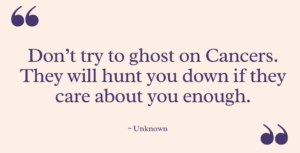
(不要試圖對癌症視而不見,如果它已經「在乎你」(也就是進入你的生命),你是逃不掉的。這句話的雙關轉換:不要試著對巨蟹座玩消失,只要他們真的在乎你,他們一定會把你找出來。)
Cancer, Elsewhere
Cancer is a discipline assigned to humanity—a trial of both knowledge and the Way. Within the Creator’s proposition, it serves as a reminder that we must remove anger, uproot grievance and pain, and ultimately dissolve hatred.
Where do cancer cells come from? What is cancer, really? This condition, which affects nearly half the population in the civilized world, has become for most people nothing more than a shadow of fear—without clarity, without understanding.
The truth that deserves to be seen is this: we have all failed the Creator’s proposition, and the professional systems entrusted with treatment have, in effect, handed in blank papers along the way.
Technology continues to advance toward “treatment,” yet this path has long been entangled with human interests. While fear is being sold, enormous commercial opportunities are simultaneously created.
As a result, a fundamental question of life has been ignored for far too long:
Do we eat in order to live, or do we live in order to eat?
If living is the primary objective, then our focus should be on the quality of life. If eating is the core purpose of existence, then we should devote all our energy to eating.
The reality is that we have indeed placed our entire focus on eating. Desire has expanded the territory of diet, and commerce has reinforced its foundations. Beyond food, we also consume medicine and supplements. The truth is: there is nothing we do not eat.
So, is cancer caused by eating?
The answer is both yes and no.
Diet is indeed related to the development of cancer, but such a statement is easily misunderstood. Most people instinctively reduce the issue to “what we eat” and “how much we eat,” because nearly all dietary information revolves around these two dimensions.
Pause here for a moment, and quietly reflect on one question:
What role does education truly play?
Education does not exist only in schools. It also lives in the media, in government policy, and—at a deeper and more insidious level—in advertising. And it is often the last of these that is the most dangerous.
Nutrition science, unintentionally, has also provided misleading guidance. This is not unrelated to its long-standing dependence on medical authority. As a result, people have grown accustomed to seeking solutions externally, while neglecting their own responsibility—and overlooking the inherent capacity of the body itself.
What we eat does matter. How much we eat also carries weight. But the crux of the issue has never been either of these. Have we ever stood on the body’s side—looked through the body’s own perspective—to understand what it truly needs?
Because we lack education grounded in the body’s perspective, we cannot see the truth of cancer. Nor can we discern how much harm three daily meals may actually inflict on the body. And thus, we drift farther and farther from the truth.
The public’s blindness to the truth appears to be an educational issue, but at its core, it is a stark reflection of human nature.
Because the truth remains unseen, ever-larger commercial empires are built. The more complex the maze, the more guides are needed at its intersections. This is opportunity—and it is also survival.
Yet opportunity is a maze, and survival is one as well. Cancer becomes a shadow of terror precisely because such a maze is its inevitable outcome.
Returning to the subject of eating: eating creates opportunity; eating also creates life. And eating simultaneously constructs a super-maze.
Most people can vaguely grasp the idea that they “should eat less,” yet very few truly receive the messages sent from the body’s own standpoint. Because what the body has been crying out all along is, in fact, a single, simple message: do not eat.
But we have already turned our bodies into a tangled maze, to the point where this message can no longer be received. We have also completely lost our sensitivity to the “timeline” the body truly longs for.
This timeline refers to a stretch of time during which the body is not disturbed. Its essence lies in continuity.
Put plainly, the body needs a period of time during which it does not have to process food. Only when this period extends long enough can the body’s capacity for waste removal and self-repair gradually unfold.
We need to engage in dialogue with our bodies—a deep dialogue. Unfortunately, the broader environment in which humanity lives is almost entirely devoid of such education. Instead, development continues to move away from the body’s standpoint, even fostering opposition toward the body itself.
Cancer has become a land of fear precisely because the direction has been wrong. Seeking solutions outward will never succeed, because the fundamental solution resides within the body.
True healing is the result of long-term cooperation with the body. The body carries life, and it carries vitality. If we genuinely cherish this vessel of life and vitality, we must adopt an attitude that protects life and sustains vitality. The Creator’s proposition has already revealed all the essential points.
We eat in order to live. Therefore, we must clearly understand the posture of “eating” within the Creator’s proposition—an approach to eating that respects the body’s standpoint.
Beyond this, we must also rediscover the body’s needs through the subject of sleep. In essence, sleep is a period during which the body longs not to process food.
When sleep diminishes while eating time continues to expand—甚至 encroaching upon ideal sleep hours—this becomes, for the body, a form of torment and a prelude to disaster.
Only when we truly become familiar with the body’s standpoint, and understand how it is disturbed by emotions and battered by daily life, do we approach the Creator’s proposition.
And in that moment, we finally realize:
Wellness has never been a technical problem—it is a reflection of life as a spiritual discipline.


