《自律養生實踐家之旅415》 能量的流向
我的工作是「疾病觀察」,除了分析疾病行走的軌跡,並在可能的情況下,嘗試描繪出健康的藍圖。
學習的目的終究在於實用,一旦身體出現異常,我們便立刻面臨抉擇。然而在民間長久形成的教條裡,幾乎只有一種選項,一切以醫生的指示為依歸。唯獨我不斷提醒,還有另一種可能性,那就是:聽身體的意見。
凡是坐在我面前,詢問我身體狀況該何去何從的人,我無法給答案。因為在這個時刻,選擇必須由當事人自己做出。
現實卻往往相反,真正做決定的多半是病患身旁的家人,結果經常令人不忍卒睹。即使不是自己的選擇,生病的人仍然必須承擔最後的後果。
我見證過無數人生旅途中必須面對的重大抉擇,其中最艱難的,莫過於生死議題。在那樣的時刻,決定權看似握在你手中,事實不然。
我衷心希望,我所訓練或陪伴的每一位學員,不必在餘生被迫面對這樣的抉擇。如果終究還是落入同樣的窘境,便意味著:一切都白學了。
因此,真正的重點,是決定權,是一種必須紮實握在自己手中的決定權。因為身體是自己所用,生命為自己所有;自己做決定,既是承擔,也是責任。
我們所處的環境,幾乎完全缺乏這樣的教育。我期待,凡是接受過自律養生洗禮的人,都能學會生命中最重要的承擔,照顧自己,是此刻的事,不是以後的事。
因為「以後的事」,終將變成別人的事。此刻不願意承擔,日後就會由他人替你承擔:走進病房探視你的人在替你承擔,在你身旁為你把屎把尿的人,也在替你承擔。
終有那麼一刻,你的身體不再有能力為你承擔。我說的不是你主動選擇交給醫療處置的時候,而是連醫生也無能為力的時候。
這正是為什麼,民眾需要教育,也需要被不斷提醒:現在就該停損,現在就該改變。
我呼籲不要每天吃三餐,轉眼已將近二十年;如今,我持續呼籲把睡眠這門學分修好,並進一步提醒不要忙到引發身體的大反撲。
話題回到那個必須抉擇的關鍵時刻,真正信任身體的人,其實只有一條路可走。前提是,沒有他人的干擾,也沒有來自醫療體系的恐嚇。
能夠選擇相信身體力量的,是那些長時間與身體深度相處的人,也就是,斷食早已成為生活日常的人。
我不需要把這群人描述得多麼偉大,他們確實是一小撮人,卻能匯聚成一股巨大的力量。因為,信任身體,本身就帶著一種罕見而神奇的能量。
如此稀有的小眾,為何值得書寫?因為他們掌握了真理,因為他們的身體重新與大自然對齊,因為他們是珍惜「生物設定」的實踐者。
反觀那無法信任自己身體的絕對多數,人與身體雖然共處一室,實質上卻早已分離。身體從來沒有屬於自己的時間,自然也不可能擁有任何真正的決定權。
不知道身體要什麼,是醫學教育留給現代社會最深的迷陣。接收不到身體的訊號,或聽不見身體的聲音,是文明世界最難堪的處境。
不信任身體的人最終也只剩下一種選擇。即使選擇放棄治療,能量仍然是反向流動,失去與身體重新連結的最後契機。
當身體已經處於最難堪的境地,當事人此時才被告知可以考慮斷食,如果你問我意見,我的回答始終只有一句:太遲了。在那樣的局面下,才想與身體合作,身體未必可以配合。
每當我為讀者簽書時寫下「即知即行」,我不知道有多少讀者真正接住了這份誠懇。信任身體,不是觀念,是行動,而且必須在機會來臨的那一刻,就立刻展開。
每月七日斷食、每半年三週斷食,早已成為我們穩定而規律的淨化節奏。這是一種高度自律的「以終為始」計畫,在行動的第一時間,就已清楚看見終點。
你仍然可以問我們為何要如此生活,答案其實很簡單:我們不希望有任何一天,必須把身體交給他人管理。
當你選擇信任身體,能量便會朝向正向、自癒的方向流動。當你把決定權交還給身體,清除不需要的物質、重建平衡的任務,也一併交付。
最終,身體會回應你一個最接近完美的平衡。
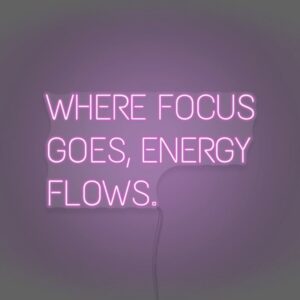
(你把注意力放在哪裡,生命的能量就往哪裡流動。)
The Direction of Energy
My work is the observation of disease.
Beyond analyzing the paths diseases take, I attempt—whenever possible—to sketch a blueprint for health.
Learning ultimately serves one purpose: application.
The moment something goes wrong in the body, we are forced to make a decision. Yet within long-standing social conditioning, there is usually only one accepted option—to follow the doctor’s instructions without question.
What I persistently remind people of is this: there is another possibility—listening to the body itself.
Anyone who sits in front of me and asks where their physical condition should lead them next will not receive an answer from me.
Because at that moment, the choice must be made by the person concerned.
Reality, however, often unfolds in the opposite direction.
Decisions are usually made by the patient’s family, and the outcomes are frequently heartbreaking. Even when the decision is not their own, it is the sick person who must bear the final consequence.
I have witnessed countless pivotal decisions along life’s journey, and the most difficult of all inevitably revolve around life and death.
In those moments, decision-making appears to be in your hands—but in truth, it no longer is.
I sincerely hope that every student I train or accompany will never be forced to face such choices in the later years of life.
If one ultimately ends up in the same predicament, it means only one thing: everything learned was in vain.
The real issue, therefore, is decision-making power—
power that must be firmly held in one’s own hands.
The body is yours to use. Life is yours to live.
To decide for yourself is both responsibility and accountability.
Our environment offers almost no education of this kind.
I hope that anyone who has undergone the discipline of self-regulated wellness learns the most important responsibility in life:
taking care of yourself is a matter of now, not later.
Because “later” will eventually become someone else’s burden.
If you refuse to take responsibility now, others will carry it for you in the future—
those who come to visit you in the hospital,
and those who stand by your side, cleaning and caring for you.
There will come a moment when your body can no longer carry that burden for you.
I am not referring to the moment when you choose medical intervention,
but to the moment when even doctors are powerless.
This is precisely why people need education—and constant reminders:
now is the time to cut losses; now is the time to change.
I have been urging people not to eat three meals a day for nearly twenty years.
Today, I continue to emphasize completing the “course credits” of sleep,
and to warn against working to the point of triggering the body’s violent backlash.
Returning to that critical moment of choice—
those who truly trust the body actually have only one path to take.
The prerequisite is freedom from interference by others and freedom from fear imposed by the medical system.
Those who can choose to trust the body’s power are people who have spent long periods in deep relationship with their bodies—
in other words, those for whom fasting has already become a way of life.
I do not need to portray this group as extraordinary.
They are indeed a very small minority, yet they can converge into an immense force.
Because trusting the body carries a rare and almost mystical energy of its own.
Why are such a small and uncommon group worth writing about?
Because they have grasped the truth.
Because their bodies are realigned with nature.
Because they are practitioners who respect their biological design.
By contrast, the overwhelming majority who cannot trust their own bodies live in quiet separation.
The person and the body may share the same space, but in essence, they are disconnected.
When the body has never been granted its own time, it can never possess real decision-making power.
Not knowing what the body wants is the deepest maze left behind by medical education in modern society.
Failing to receive the body’s signals—or to hear its messages—
is one of the most humiliating conditions of life in a civilized world.
Those who do not trust their bodies ultimately have only one option left.
Even if they choose to abandon treatment, their energy continues to flow in reverse,
losing the final opportunity to reconnect with the body.
When the body has already reached its most desperate state,
and only then is fasting suggested,
if you ask for my opinion, my answer is always the same: it is too late.
In such circumstances, attempting to cooperate with the body does not guarantee the body’s cooperation in return.
Whenever I sign a book for a reader and write the words “know it and act immediately,”
I wonder how many truly receive the sincerity behind them.
Trusting the body is not a concept—it is action.
And it must begin the moment the opportunity appears.
Seven-day fasts each month and three-week fasts every six months have long become our steady and regular rhythm of purification.
This is a highly disciplined “begin-with-the-end-in-mind” plan—
a way of seeing the destination clearly from the very first step.
You may still ask why we choose to live this way.
The answer is simple:
we do not want a single day to arrive when our bodies must be managed by others.
When you choose to trust the body, energy begins to flow toward healing and restoration.
When you return decision-making power to the body,
the tasks of eliminating what is unnecessary and rebuilding balance are entrusted to it as well.
In the end, the body responds—
with a state as close to perfect balance as possible.


