
《自律養生實踐家之旅427》 首腦
人類輕忽睡眠重要性的事實,讓我深深思索,也讓我回頭檢視自己生命旅途中曾經重度迷失的歲月。
我知道,有一種環境的力量會影響彼此,甚至制服一個人。曾經的我,在踏入職場之後,就被這種力量完全牽制,成為一個只問存活、不問世事的人。
大約十年的時間,我形容當時的自己像一縷孤魂。沒有思想,缺乏判斷力,困在自己的理想與慾望世界裡,把人生經營得一團糟。
感謝閱讀,讓我意識到自己必須奮起。只是,初期的我並沒有明確方向,只是在文字的世界裡摸索。後來,因為一位醫學院同學的提示,我被引入細菌這個大方向。
我在「抗生素後遺症」的書堆中醒來,突然感覺自己似乎可以做一點事。當時的大致方向,是如何拯救不佳的腸道環境。除了醒悟之外,那也是我深入細菌世界最單純的意圖。
那個年代的養生市場,正處於益生菌觀念的啟蒙期。我的觀點仍停留在好菌與壞菌的分野,那是一種受限的視角,少了大自然共生系統的完整藍圖。
感謝斷食,讓我的眼界大開。我終於把視角直接安置在腸道之內,清楚看見那個環境中的所有重要元素,包括免疫細胞與細菌之間的對話,也包括有益菌與其他寄生菌之間,如何形成勢力的權衡與制衡。
第一次讀到「腸道微生物群扮演一個器官的角色」,和第一次讀到「脂肪組織是身體的一個內分泌器官」一樣,我都經歷了從一頭霧水到深入探索的過程。
脂肪如何介入身體異常組織的發展?生活習慣若長期沒有讓身體使用脂肪作為燃料,是第一個問題;沒有重建菌相的生活習慣,則是第二個問題。
這樣明確的思考脈絡,源自於我對「菌腦腸軸」平衡系統的理解。每當想到人體這個進化而來的超級作品,我依然感到嘆為觀止。
「菌腦腸軸」裡存在三個單位,三方彼此傳遞訊息,三方的角色也同樣重要。可是其中有一個單位,長久以來從未被你我視為具備實質功能的存在,那就是完整名稱為「腸道微生物群(Microbiota)」的細菌。
身上的器官具備維繫生命的功能,細菌這個器官也不例外。現代人為何特別需要正視細菌這個器官的存在?因為不只是藥物在凌遲它,連食物也可能具有侵犯它、破壞它的力量。
這一點,必須談到熟食。首先,熟食的消化工程,對腸道環境是一種大規模的干預;接著,食物形成糞材後,因應消化的生命力耗損,大面積留置在腸道空間中,也會製造出另一種污染。
因此,我們必須繼續討論「重建菌相」這個名稱的意義。每天都食用熟食的我們,必須具備每天進行菌相重建的態度,因為我們必須嚴正看待腸道內這個長期缺乏養護的器官。
我把生食列入教材,是以「食物的本質是生命」展開論述。我要引導學習者看見的,不只是食物本身,而是腸道內的生態。
生食與熟食的差異,不只是是否容易消化,而是是否干擾腸道環境,也關係到它們分別嘉惠了哪一類細菌(這裡,你得思考的是:生食多半是植物)。
遺憾的是,學習者的思考常被環境教育所限制。多數人關心的是生食的污染與熟食的安全,卻很難把焦點轉向自己腸道內真正的需求。
前文所提到的環境力量,到底有多大的破壞力?身為一個曾經從那個漩渦掙脫出來的人,我深知其中的困境。如今的我,被一種覺醒的力量牽引著,也要求自己必須堅守在這個持續進步的思考頻率中。
也因為自己經歷過,我能理解人們的困境與需求。可是,我這把鑰匙沒有能力打開所有的鎖頭,只能順著命運的牽引,一把一把的去嘗試。
我們能做的,就是盡力解開學習者早已被環境框住的思考。透過深度淨化的實際體驗,把養生視角徹底轉成身體的視角,進而深刻感受到腸道空間的工作效率。
當學習者理解,許多長期被醫療觀點框在大腦結構中的老化病症,例如失智症與巴金森氏症,並非只與大腦有關,而是與腸道環境存在深層關聯時,就有機會領悟為何「重建菌相」必須是每天的例行公事。
話題再回到「菌腦腸軸」,這是人類養生觀的一項重大突破。被重點提升其重要性的角色,當然是細菌,這個你我都極度欠缺認識的器官。
因此,我很本能地把「菌、腦、腸」分別視為三個腦。大腦順理成章,是我們熟知的第一個腦;我們長期關注的腸道,是第二個腦;而腸道微生物群,則是我們遠離已久、忽略已久的第三個腦。
若要釐清身體平衡的啟動順序,我們理當從哪一個腦開始?從多年斷食經驗中,我理出一個極為清楚的順序:細菌,必須是我們首先照顧的單位。
要照顧好腸道微生物群,必須熟練斷食。很多人無法理解斷食與重建菌相之間的關係,而我則從每日一餐與補充優質活菌的日常中,收到身體對平衡處理所給出的誠懇回應。
睡眠與排便之間的關係很明確,代表睡眠工程與腸道細菌之間維持著密切的連結,現代人不只忽略一項,是兩者都不關注。
在進一步說明之前,我們必須先從大自然的共生圖像中,重新收納細菌在所有生物鏈之間的角色。當我們確認它的重要性之後,再把焦點轉回自己的腸道,思考一個問題:當細菌成為一個健全的單位,接下來真正受惠的,就是腸道。而腸道一旦受惠,身體的秩序就有機會重新被整理。
我真正想強調的,是遠離重症的超前部署。面對全球失智版圖不斷擴大的現象,改變飲食與生活習慣,早已是當務之急。
我們必須先釐清自己身體的「首腦」究竟在哪裡,然後非常認真的守護它、養護它。
也許,我們過去一直以為首腦在頭上。可是當我走進腸道,走進細菌的世界,走進身體最深層的共生秩序,我才逐漸明白:真正決定生命方向的首腦,未必是最會思考的那一個,而是最能維持平衡的那一個。
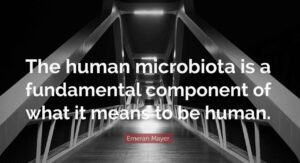
(所謂「人之所以為人」,人體微生物群正是其中最根本的組成之一。)
The Chief
The fact that human beings so often underestimate the importance of sleep has led me into deep reflection. It has also brought me back to examine the years in my own life when I was profoundly lost.
I know there is a certain force within the environment that influences us, and may even subdue a person completely. I was once seized by that force after entering the workplace, becoming someone who cared only about survival and no longer paid attention to the world.
For roughly ten years, I would describe myself at that time as a wandering soul. I had no real thoughts, little judgment, and was trapped inside a world built by my own ideals and desires. I had managed my life into utter disorder.
I am grateful for reading, because it awakened me to the fact that I had to rise again. In the beginning, however, I had no clear direction. I was simply searching my way through the world of words. Later, through the reminder of a medical school classmate, I was guided toward the broad direction of bacteria.
I awakened among piles of books on the aftereffects of antibiotics, and suddenly felt that perhaps I could do something. At the time, my general direction was how to rescue an unhealthy intestinal environment. Beyond awakening, this was also my simplest intention as I began to enter more deeply into the world of bacteria.
In those years, the health market was still in the early stage of probiotic awareness. My perspective remained limited to the distinction between good bacteria and bad bacteria. It was a restricted view, lacking the complete blueprint of nature’s symbiotic system.
I am grateful for fasting, because it opened my vision. I finally placed my perspective directly inside the intestines, and clearly saw all the important elements within that environment, including the dialogue between immune cells and bacteria, as well as the way beneficial bacteria and other parasitic microbes form a balance of power and restraint.
The first time I read that “the gut microbiota plays the role of an organ,” I went through the same process as when I first read that “adipose tissue is an endocrine organ of the body.” In both cases, I moved from complete confusion into deeper exploration.
How does fat become involved in the development of abnormal tissues in the body? The first issue is that long-term lifestyle habits do not allow the body to use fat as fuel. The second issue is a lifestyle that has not rebuilt the microbial ecosystem.
This clear line of thought comes from my understanding of the balance system known as the Brain–Gut–Microbiota Axis. Whenever I think of the human body as this superlative work of evolution, I still feel a profound sense of awe.
Within the Brain–Gut–Microbiota Axis, there are three units. These three parties transmit messages to one another, and each plays an equally important role. Yet one of these units has long been overlooked by us as something with any substantial function. That unit is bacteria, more precisely known as the gut microbiota.
The organs of the body all possess functions that sustain life. Bacteria, as an organ, are no exception. Why do modern people especially need to face the existence of this bacterial organ? Because it is not only medication that can torment it; even food may have the power to invade and destroy it.
This brings us to cooked food. First, the digestive engineering required by cooked food is a large-scale intervention in the intestinal environment. Then, after food becomes fecal material, the depletion of vital force caused by digestion leaves large areas of residue in the intestinal space, creating another form of pollution.
Therefore, we must continue to discuss the meaning of the term rebuilding the microbial ecosystem. For those of us who eat cooked food every day, we must adopt the attitude of rebuilding the microbial ecosystem every day, because we must take seriously this long-neglected organ within the intestines.
I include raw food in my teaching materials by beginning with the statement: the essence of food is life. What I want to guide learners to see is not merely food itself, but the ecology within the intestines.
The difference between raw food and cooked food is not only whether something is easier to digest. It is also whether it interferes with the intestinal environment, and which kind of bacteria it benefits. Here, what you must consider is this: raw food is mostly plant-based.
Unfortunately, learners’ thinking is often restricted by environmental education. Most people are concerned with the contamination of raw food and the safety of cooked food, yet they find it difficult to shift their focus toward the true needs within their own intestines.
How destructive is the environmental force mentioned earlier? As someone who once broke free from that vortex, I understand the difficulty deeply. Today, I am pulled forward by a force of awakening, and I also require myself to remain firmly within this ever-progressing frequency of thought.
Because I have experienced it myself, I can understand people’s difficulties and needs. Yet the key in my hand is not capable of opening every lock. I can only follow the pull of destiny and try them one by one.
What we can do is make every effort to loosen the thinking that learners have long had framed by their environment. Through the real experience of deep purification, we can thoroughly shift the health perspective into the body’s perspective, and then deeply sense the working efficiency of the intestinal space.
When learners understand that many aging-related diseases long framed by the medical perspective as belonging to the brain structure—such as dementia and Parkinson’s disease—are not related only to the brain, but also have a deep connection with the intestinal environment, they may begin to realize why rebuilding the microbial ecosystem must become a daily practice.
The topic returns once more to the Brain–Gut–Microbiota Axis. This represents a major breakthrough in humanity’s understanding of health cultivation. The role whose importance has been elevated, of course, is bacteria—this organ that you and I have both understood far too little.
Therefore, I instinctively regard the microbiota, the brain, and the gut as three brains. The brain itself naturally stands as the first brain, the one we are most familiar with. The intestine, which we have long paid attention to, is the second brain. The gut microbiota, meanwhile, is the third brain—one from which we have been distant for too long, and one we have neglected for too long.
If we wish to clarify the order in which bodily balance begins, from which brain should we start? From many years of fasting experience, I have arrived at an extremely clear sequence: bacteria must be the first unit we care for.
To care well for the gut microbiota, one must become familiar with fasting. Many people cannot understand the relationship between fasting and rebuilding the microbial ecosystem. Yet through the daily rhythm of one meal a day and the supplementation of high-quality live bacteria, I have received the body’s sincere response in its work of restoring balance.
The relationship between sleep and bowel movements is very clear. It shows that the sleep process and intestinal bacteria maintain a close connection. Modern people neglect not just one of these, but both.
Before explaining further, we must first return to nature’s image of symbiosis and reclaim the role of bacteria within all biological chains. After we confirm its importance, we can bring our focus back to our own intestines and consider one question: when bacteria become a healthy and complete unit, the next true beneficiary is the intestine. Once the intestine benefits, the order of the body has the chance to be reorganized.
What I truly want to emphasize is proactive preparation for staying away from severe illness. In the face of the expanding global landscape of dementia, changing diet and lifestyle habits has already become an urgent necessity.
We must first clarify where the chief of our own body truly resides, and then protect and nourish it with great seriousness.
Perhaps we have always believed that the chief is located in the head. Yet when I entered the intestines, entered the world of bacteria, and entered the deepest symbiotic order of the body, I gradually came to understand this:
The true chief that determines the direction of life may not be the one that thinks the most, but the one that best maintains balance.


