《自律養生實踐家之旅432》 醫療思維的致命敗筆
信任,可以讓生命不斷增添信心與希望;也可能讓信心在某一天徹底崩潰,甚至一敗塗地。
當信任的對象與路線正確無誤,信任會成為生命的支撐;可是,當信任的標的只是缺乏立足點的創意、學說,或被包裝過的權威論述,人在迷霧中前行,終有一天會發現,自己曾經全然信任的對象,竟然消失無蹤。
我的前半段人生,是在信任醫療的教條中長大。中年之後,生命卻巧妙翻轉,我意外與自己的身體重新接軌。在身體的引導中,原本根深蒂固的醫療思維與邏輯,幾乎在我的認知裡全面倒塌。
並不是我刻意要摧毀任何人對醫療的觀感,醫療,是我的成長背景,也是我的大學生涯。它的起心動念原本是救人,不是製造更多病痛。只是,事實的複雜之處在於:再好的初衷,一旦摻入太多雜質,又被傲慢自大的人性無限放大,最後就可能偏離原本的方向。
這一切的反轉,要從我對宿便的重新認識說起。那是經歷一段時間不進食之後,身體交給我的看見,也是生命交給我最正確的學習方向。因為斷食,我第一次真正領悟到身體內在的潛力。
經過數十次天數不等的斷食經驗,我對身體開啟了全新的觀感,也推翻了過去人們對「宿便」的表面定義。真正的宿便,或許不只是停留在腸道管道之間,而是更深存在於腸道結構與身體長期承載的狀態之中。
我們生活在「每天都要吃」與「每天都要排便」的對比關係裡,卻很少真正體會身體的承受與無奈,也無從意會身體原本具備的清理能力。這其實也是一種被耽誤的信任,而且是極其嚴重的耽誤。
我們不知道身體每天都在囤積廢物,也不知道身體清除廢物的能力,早已被我們長期擱置。原本只要給身體時間與機會,便可能逐步完成的事,卻因為醫療思維的介入,成為藏在地窖裡的真相。
我把「廢物」的定義再擴大,凡是身體主觀認為不需要繼續存在的,都可以視為身體需要處理的負擔,包括過量囤積的脂肪、某些異常增生,甚至因長期負面情緒所引發的小規模囊腫與結節。
是的,這些原本都屬於身體的權責範圍。我們必須給身體機會,讓它有時間執行自己的任務。若要精準詮釋這個機會,仍然要回到我一再提起的三位虛擬醫生:大自然、時間、耐心。
我的體悟很簡單:給身體時間,也給身體力量,讓它去做它原本就該做的事。
如果你願意在平日生活中給身體機會,就不至於總是等到囤積嚴重時才急著求醫。我花了十多年經歷,反覆講述這麼簡單的生命哲理。很多人似乎聽懂了,可是轉身之後,又被環境的漩渦捲走。
這一刻不願意做的事,往往會變成最後那一刻的恐懼與擔憂。當身體的負擔累積到某個程度,人便被迫透過手術割除聽說可能危害身體的病灶。可是,這樣的舉動不見得真正解決病人的問題。最糟糕的是,醫病雙方都以為事情就此結束了。
情緒所引起的脂肪組織糾結,或各種微小的身體反應,其實無時無刻都可能在我們身上發生。身體原本具備即知即行的能力,對身體來說,那可能只是每天需要處理的垃圾;可是在醫療觀點裡,卻往往被視為異常發展的濫觴。
在我的理解中,某些被醫生認定必須割除的囊腫,與臉上長出青春痘的狀況,有相似的存在軌跡。它們都是內分泌失衡、代謝失序或長期身心壓力的呈現,也都有機會透過身體本身的調整機制,獲得改善。
你不可能因為臉上長了青春痘,就割掉臉上一塊肉;也不可能因為長途行軍造成腳底水泡,就被迫割掉腳底一塊肉。可是,當同樣的邏輯轉換到身體內部時,人們卻常常因為恐懼,而迅速交出自己的判斷權。
現在已經是二十一世紀,出生在這個時代的你我,早已是高度進化的生命作品。我總是建議大家好好研究睡眠,因為你會在睡眠的細節中,領悟自己身體的不凡,進而願意用心修正生活作息與情緒管理。
也許是你易怒的特質,也許是你習慣隱藏委屈,也許是你經常熬夜做事,也許是你總在壓力中硬撐。這些屬於個人修練的部分,才是療癒真正的核心,不是醫生手中的手術刀。
對於必須割除膽囊、盲腸,或其他急症處置的緊急個案,我願意尊重醫生的專業。唯獨對於甲狀腺結節、乳房囊腫等處置,我因為遇見太多術後抱怨與復發的案例,始終認為病人真正該學的,不只是盲目接受,而是認清事實,理解身體,並重新找回自己的判斷能力。
或許,每個人都要回到生命最核心的取捨。不停歇的慾望,是我們的問題;要得太多,是我們的課題。該做的事沒有做,不該做的事卻拼命做。今天的固執,往往會變成明天的悔恨。
討論這個議題,終究要面對最嚴苛的取捨。該捨的時候不願意捨,最後所面對的捨,可能就不再只是飲食、作息、情緒與慾望,而是器官能否保留,或者親人生命急救時,家屬必須承擔的重大決定。
我見過太多人面對藥物停不掉的困境,也見過太多人面對器官早已被摘除,或即將被摘除的局面。早在許多年以前,我就提醒他們改變飲食與睡眠習慣。可是,我最常聽到的回答,不是「很難」,就是「做不到」。
人總是見到棺材,才願意放下身段;總是生命危急,才開始呼天搶地。為何局面總是走到這一步?因為人們心中還有醫療可以倚靠,還有醫院可以救助。
我在包括我父母親在內的許多個案中覺醒,醫療思維最大的敗筆,在於「人定勝天」的傲慢。可是,那個「天」不是遠在天邊的神祕力量,而是你我的身體,是宇宙賦予我們的療癒天賦。
我懇請聽到的人,走回自己的身體。我央求聽懂的人,重新認識自己身體的原始設定。
所有鬆掉的螺絲,都有機會重新被拴緊;早已失去的平衡,也仍然可望被身體一點一滴調回來。
換個方向吧,不再只是信任他人的方向,而是重新信任自己的方向。你必須在獨處與靜默中,與自己深度對話;你必須在極度寧靜裡,聽見身體從內在發出的聲音。
身體多半只是呢喃,不會咆哮。真正懂身體的人,不會等它大聲呼救,才決定回頭。
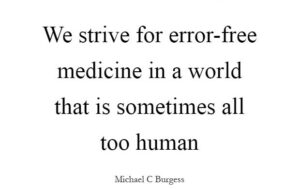
(在一個難免受人性侷限的世界裡,我們仍努力追求沒有錯誤的醫療。)
The Fatal Flaw of Medical Thinking
Trust can continually add confidence and hope to life. It can also cause that confidence to collapse completely one day, leaving everything in ruins.
When the object and direction of trust are correct, trust becomes a support for life. But when what we trust is merely an idea without solid ground, a theory lacking foundation, or an authoritative discourse wrapped in attractive packaging, we may move forward in a fog—only to discover one day that the very thing we once trusted so completely has vanished without a trace.
The first half of my life was shaped by the doctrine of trusting medicine. Yet after midlife, life turned in a subtle and unexpected way. I reconnected with my own body. Under the guidance of the body, the medical thinking and logic that had once been deeply rooted in me almost completely collapsed in my understanding.
I am not deliberately trying to destroy anyone’s perception of medicine. Medicine was my upbringing; it was also my university life. Its original intention was to save lives, not to create more suffering. Yet the complexity of truth lies here: even the best intentions, once mixed with too many impurities and magnified endlessly by human arrogance, may eventually drift far away from their original direction.
This entire reversal began with my renewed understanding of retained waste in the body. It was a realization handed to me by the body after a period of not eating. It was also the most accurate direction of learning that life had ever given me. Because of fasting, I truly understood, for the first time, the inner potential of the body.
After dozens of fasting experiences of varying lengths, I opened an entirely new perception of the body. I also overturned the superficial definition people once held about retained waste. True retained waste may not merely be something left within the intestinal passage. It may exist more deeply within the intestinal structure and within the long-term burdens carried by the body.
We live within the contrast between “eating every day” and “having bowel movements every day,” yet we rarely truly feel the body’s endurance and helplessness. Nor do we realize the cleansing ability the body originally possesses. This, too, is a form of delayed trust—and a very serious delay.
We do not know that the body is accumulating waste every day. Nor do we know that the body’s ability to clear waste has long been set aside by us. What the body might have gradually completed on its own, as long as we gave it time and opportunity, has instead become a truth hidden in the cellar because of the intervention of medical thinking.
I further expand the definition of “waste.” Anything the body subjectively recognizes as no longer needing to remain may be seen as a burden the body needs to deal with. This includes excessive accumulated fat, certain abnormal growths, and even small cysts and nodules triggered by long-term negative emotions.
Yes, these originally belong within the body’s sphere of responsibility. We must give the body a chance and allow it time to carry out its own tasks. If we want to interpret this opportunity precisely, we must return once again to the three imaginary doctors I have repeatedly mentioned: Nature, Time, and Patience.
My realization is very simple: give the body time, and give the body strength, so it can do what it was originally meant to do.
When you are willing to give your body a chance in everyday life, you will not always have to wait until accumulation becomes severe before rushing to seek medical help. I have spent more than ten years repeatedly speaking about this simple philosophy of life. Many people seem to understand it, but once they turn around, they are swept away again by the whirlpool of their environment.
What one is unwilling to do at this moment often becomes fear and anxiety at the final moment. When the body’s burden accumulates to a certain degree, a person may be forced to undergo surgery to remove a lesion said to be potentially harmful to the body. Yet such an action does not necessarily solve the patient’s real problem. The worst part is that both doctor and patient may believe the matter has ended there.
The entanglement of fatty tissue caused by emotions, or various subtle bodily reactions, may actually be happening within us at every moment. The body originally possesses the ability to know and act immediately. To the body, these may simply be the garbage it needs to process each day. But from the medical perspective, they are often regarded as the beginning of abnormal development.
In my understanding, certain cysts that doctors determine must be removed share a similar path of existence with acne appearing on the face. They are all expressions of endocrine imbalance, metabolic disorder, or long-term physical and emotional stress. They may also have the opportunity to improve through the body’s own mechanisms of adjustment.
You would not cut off a piece of flesh from your face simply because acne appeared there. Nor would you cut off a piece of flesh from the sole of your foot simply because a blister formed after a long march. Yet when the same logic is transferred to the inside of the body, people often surrender their judgment very quickly because of fear.
We are already living in the twenty-first century. Those of us born into this era are already highly evolved works of life. I always encourage people to study sleep carefully, because within the details of sleep, you will come to realize how extraordinary your own body is. From there, you may become willing to sincerely correct your daily routine and emotional management.
Perhaps it is your tendency toward anger. Perhaps it is your habit of hiding grievances. Perhaps it is your habit of staying up late to finish work. Perhaps it is the way you always force yourself to endure under pressure. These areas of personal cultivation are the true core of healing—not the scalpel in a doctor’s hand.
For emergency cases that require the removal of the gallbladder, appendix, or other urgent procedures, I am willing to respect medical expertise. But when it comes to the treatment of thyroid nodules, breast cysts, and similar conditions, I have encountered too many complaints after surgery and too many cases of recurrence. Therefore, I have always believed that what patients truly need to learn is not blind acceptance, but the ability to recognize the facts, understand the body, and reclaim their own judgment.
Perhaps everyone must return to the most essential choices in life. Endless desire is our problem. Wanting too much is our lesson. The things we should do, we fail to do; the things we should not do, we do with all our strength. Today’s stubbornness often becomes tomorrow’s regret.
To discuss this issue is ultimately to face the harshest form of choice. When we refuse to let go at the moment we should, what we are forced to give up in the end may no longer be merely food, routines, emotions, and desires. It may become a question of whether an organ can be preserved, or the grave decision family members must bear when a loved one’s life requires emergency rescue.
I have seen too many people trapped in the difficulty of being unable to stop taking medication. I have also seen too many people facing organs that have already been removed, or are about to be removed. Many years ago, I had already reminded them to change their eating and sleeping habits. Yet the answers I heard most often were not “It is difficult,” but “I cannot do it.”
People often refuse to humble themselves until they see the coffin. They begin to cry out only when life is already in danger. Why does the situation always reach this point? Because deep in people’s hearts, there is still medicine to rely on, and there is still a hospital to rescue them.
Through many cases, including those of my own parents, I awakened to this: the greatest flaw of medical thinking lies in the arrogance of believing that human will can conquer nature. But that “nature” is not some mysterious force far away in the heavens. It is your body and mine. It is the healing gift bestowed upon us by the universe.
I sincerely ask those who hear this to return to their own bodies. I earnestly appeal to those who understand this to rediscover the original settings of their bodies.
Every loosened screw still has the chance to be tightened again. Every balance that has long been lost may still be gradually restored by the body, little by little.
Change direction. No longer merely trust the direction given by others. Instead, return to the direction of trusting yourself. You must enter solitude and silence, and engage in a deep conversation with yourself. You must listen, in profound stillness, to the voice rising from within the body.
Most of the time, the body only whispers. It does not roar.
Those who truly understand the body do not wait until it cries out loudly before deciding to turn back.


