《自律養生實踐家之旅435》 閒,必須大於忙(把時間還給身體的養生練習)
搭乘公車或捷運時,我很少坐著,除非是在乘客很少的時段。我總覺得,車上一定有更多人比我更需要坐椅子。
站在車廂裡,我通常戴著耳機聽音樂,手機則安穩的躺在褲子口袋內。放眼望去,幾乎人人都在看手機,甚至有不少年輕人專注於手遊。這樣的景觀,早已是全世界共同的日常畫面。
眼睛的傷害是一個面向,資訊的轟炸是另一個面向。
過去二十年,這種畫面持續放大,每個人都在生活中不斷演練低頭。便利,確實是科技帶來的優勢;可是劣勢,你我心裡也都清楚,這條路繼續走下去,對人類的傷害,恐怕會遠大於它所帶來的福利。
資訊量,正在成為一種壓力。回顧沒有網路的時代,我們恐怕很難想像,世界竟會走到如此忙碌、如此擁擠、如此無法停歇的地步。
由於身邊的實境,我有機會理出「忙」與「病」之間的關係。因為忙碌而犧牲睡眠是一個重大議題。為數眾多的人,在這門必修學分上始終修不過,最後必定要接受身體的反撲。
在〈交接〉這篇文章中,我曾提到:扣除工作與睡眠各八小時,剩下的八小時該如何運用,是養生最容易被忽略的日常作息。除了散步、打坐與閱讀之外,刻意的無所事事,其實是一種意義深遠的練習。
在放鬆與放空的練習中,我試著聆聽身體回饋給我的訊息。對照三十年前、二十年前、十年前的自己,我確實收到了一種過往人生不曾有過的回應。
「沒有事要做」到底是什麼感覺?該怎麼解釋?那是一種把睡眠情境移到清醒狀態中的練習。
它不只是行事曆上沒有安排,也可以是坐著發呆,可以是站在窗邊看著遠方的天空,也可以只是安靜看著往來的車流與行人。
如果你坐著坐著,很容易就睡著了,代表你積欠身體太多睡眠債。那不是放空,而是身體在討債。你該調整作息,把看電視與看手機的時間都歸還給睡眠。
如果你可以很清醒的放鬆,請試著把注意力放回身體,除了呼吸與心跳之外,感受身體正在發生的每一種流動。
我想分享的,是「不安排事情」的重要性。不是要教你如何觀想,也不是要把放空變成另一種技巧。我只是希望你有機會感受:當壓力荷爾蒙完全停歇時,身體處於什麼樣的狀態。
無法理解嗎?打開手機,不論是看 YouTube、Facebook、Instagram,或是 Threads,然後對照一下。你會發現,大腦的思緒開始被牽動,壓力荷爾蒙的釋出也跟著上揚。
練習和身體互動的前期,我每天在部落格發文。那時候,我深刻感受到化學觀念所傳遞出的數字,如何影響人們對養生的理解。有一天,我寫了一篇標題為〈物理終於戰勝化學〉的文章。
站在身體的立場論述,身體主導的是平衡。這種平衡,可以透過蹺蹺板兩端的關係來思考。導正身體,不一定靠數字,而是靠執行。物理重執行,化學重分析與研擬。
文章中寫道:「氣功師父的功力何在?芳香與音樂療法的道理何在?這是磁場,也是共振,基本上就是物理的範圍。我從重視化學的領域脫身,這是我的定見。物理終於戰勝了化學,而且即將一直贏下去。」
所謂「一直贏下去」,指的不是對抗,而是「不戰而屈人之兵」。畢竟,自然法則偏向物理,而人類的思考卻經常傾向化學。
此刻,我所思考的是人的忙碌。有沒有忙亂?或許有。有沒有盲目?或許有。有沒有忙到無所適從?或許也有。
因應壓力而釋放壓力荷爾蒙,從身體角度來看,也是一種物理現象。只是,我們很難直接量化壓力荷爾蒙的整體波動,只能透過甲狀腺的代償指標去確認異常。
後者是化學,而醫學經常透過化學追蹤結果,卻忽略物理早已執行在前端。
既然忙碌與壓力是身體的物理現象,就必須透過物理方式回應。我所謂的放鬆與放空,就是讓壓力荷爾蒙停歇的時段。它很像一段時間不進食,讓消化工程暫時停歇的練習。
吃與消化,幾乎佔據了現代人除了睡眠之外的大部分時間,我們需要停止這些重大的消化耗損,把時間歸還給身體。
同樣的,我們也需要停止壓力荷爾蒙的耗損,不是稍微降低而已,而是必須有規律的停止。
如果你認同斷食,請延續同樣的邏輯到內分泌的底層,重新正視每天滿滿的行程、任務、訊息與人際互動所引來的壓力反應。
身體不只會囤積大量食物,也會累積情緒壓力所造成的內分泌失衡,兩者都源自大腦的慾念。
人類似乎都必須經歷念頭的揮霍,才有機會面對慾念的禍害,進而願意接受靜默的禮讚。
因斷食而斷壓,或因斷壓而斷食,對身體而言,都是遲來的福音。
我們都會在人生旅途的某一站,遇見停止的提醒。只是,希望那一天不是被迫無限期停工。
整篇文章,其實可以用一個字詮釋:閒。閒,對應的是忙。兩者幾乎成了現代人健康與生病的對照。
可是,閒不需要戰勝忙,兩者也無須對決。
我們真正需要調整的,是價值順序。忙,不能永遠排在身體之前。效率,不能永遠排在睡眠之前。行程,不能永遠排在呼吸之前。成就,不能永遠排在健康之前。
一個人想要得健康,閒必須大於忙。因為身體真正需要的,不只是營養,不只是運動,也不只是睡眠。身體需要空白,需要停歇,需要沒有任務的時間,需要不被世界拉扯的時刻。
閒,不是懶惰。閒,是身體修復自己的通道。閒,是壓力停止擴張的邊界。閒,是一個人沒有失去自己的證明,我們無法承受忙與閒位置對調的後果。
因為一旦忙成為人生的主人,身體終究會用生病的方式,把我們帶回那個早就該學會的功課:
忙到失衡,閒出健康。停下來,把時間還給身體。
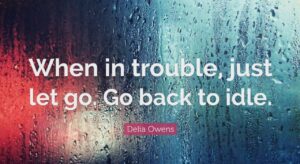
(遇到困境時,就放手吧。讓自己回到空檔, 回到不再用力的狀態。)
Leisure Must Be Greater Than Busyness A Wellness Practice of Returning Time to the Body
When I take a bus or the MRT, I rarely sit down unless there are very few passengers. I always feel that there must be someone on board who needs the seat more than I do.
Standing inside the carriage, I usually wear earphones and listen to music, while my phone rests quietly in my pocket. Looking around, almost everyone is staring at a phone. Many young people are even deeply absorbed in mobile games. This scene has long become a common daily image across the world.
Damage to the eyes is one aspect; the bombardment of information is another.
Over the past twenty years, this scene has continued to expand. Everyone is constantly practicing the posture of looking downward in daily life. Convenience is indeed one advantage brought by technology. But as for its disadvantages, you and I both know them well. If this path continues, the harm it brings to humanity may eventually far exceed the benefits it has offered.
Information overload is becoming a form of pressure. Looking back at the era before the internet, it would have been difficult for us to imagine that the world could become so busy, so crowded, and so unable to stop.
Because of the realities around me, I have had the opportunity to sort out the relationship between busyness and illness. Sacrificing sleep because of busyness is a major issue. Countless people never manage to pass this required course, and in the end, they will inevitably have to face the body’s counterattack.
In my essay “The Handover,” I once mentioned that after deducting eight hours for work and eight hours for sleep, how we use the remaining eight hours is one of the most easily neglected aspects of daily wellness. Besides walking, meditation, and reading, deliberate idleness is actually a practice of profound significance.
In the practice of relaxing and emptying myself, I try to listen to the messages my body gives back to me. Compared with who I was thirty years ago, twenty years ago, and ten years ago, I have indeed received a response I had never experienced in my earlier life.
What does it feel like to “have nothing to do”? How should it be explained? It is a practice of bringing the condition of sleep into a waking state.
It is not merely having nothing scheduled on the calendar. It can be sitting quietly in a daze. It can be standing by the window, looking at the distant sky. It can simply be watching the flow of cars and pedestrians in silence.
If you fall asleep easily while sitting quietly, it means you owe your body too much sleep debt. That is not emptying yourself; that is your body collecting what you owe. You should adjust your routine and return the time spent watching television and scrolling on your phone back to sleep.
If you can remain awake while relaxing, try bringing your attention back to the body. Beyond breathing and heartbeat, feel every kind of movement taking place within you.
What I want to share is the importance of not arranging things. I am not trying to teach visualization, nor am I trying to turn emptiness into another technique. I simply hope you have the chance to feel what state the body enters when stress hormones completely come to rest.
Is this difficult to understand? Then open your phone. Whether you watch YouTube, Facebook, Instagram, or Threads, compare the difference. You will discover that the mind begins to be pulled along, and the release of stress hormones rises with it.
In the early stage of practicing interaction with my body, I published articles on my blog every day. At that time, I deeply felt how the numbers transmitted through chemical concepts influenced people’s understanding of wellness. One day, I wrote an article titled “Physics Finally Defeated Chemistry.”
From the standpoint of the body, what the body governs is balance. This balance can be understood through the relationship between the two ends of a seesaw. Correcting the body does not necessarily rely on numbers; it relies on execution. Physics emphasizes execution, while chemistry emphasizes analysis and formulation.
In that article, I wrote: “Where does the power of a qigong master lie? What is the principle behind aromatherapy and music therapy? This is a magnetic field, and it is also resonance. Fundamentally, it belongs to the realm of physics. I have broken away from a field that places excessive emphasis on chemistry. This is my settled view. Physics has finally defeated chemistry, and it is about to keep winning.”
By “keep winning,” I do not mean confrontation. I mean subduing without fighting. After all, the laws of nature lean toward physics, while human thinking often leans toward chemistry.
At this moment, what I am thinking about is human busyness. Is there disorder within busyness? Perhaps. Is there blindness within it? Perhaps. Is there a busyness so extreme that one no longer knows what to do? Perhaps there is that as well.
From the body’s perspective, the release of stress hormones in response to pressure is also a physical phenomenon. It is just that we cannot easily quantify the overall fluctuations of stress hormones directly. We can only confirm abnormalities through compensatory indicators such as the thyroid.
The latter belongs to chemistry. Medicine often traces results through chemistry, yet overlooks the fact that physics has already been carrying out the process at the front end.
Since busyness and stress are physical phenomena of the body, they must be answered through physical means. What I call relaxation and emptiness is a period in which stress hormones are allowed to come to rest. It is much like fasting for a period of time, allowing the work of digestion to temporarily stop.
Eating and digesting occupy nearly all of modern people’s time apart from sleep. We need to stop these major digestive expenditures and return time to the body.
In the same way, we also need to stop the depletion caused by stress hormones. Not merely reduce it slightly, but stop it regularly.
If you agree with fasting, please extend the same logic to the foundation of the endocrine system. Reexamine the stress responses triggered by a daily life packed with schedules, tasks, messages, and interpersonal interactions.
The body not only stores excessive food; it also accumulates endocrine imbalance caused by emotional stress. Both originate from the desires of the brain.
Human beings seem to have to go through the squandering of thoughts before they have a chance to face the harm brought by desire, and only then become willing to accept the praise of silence.
To cut off stress through fasting, or to arrive at fasting by first cutting off stress—for the body, both are belated blessings.
On the journey of life, each of us will eventually encounter a reminder to stop. I only hope that day does not arrive in the form of being forced to stop working indefinitely.
This entire essay can actually be interpreted through one word: leisure.
Leisure corresponds to busyness. The two have almost become the contrast between health and illness in modern life.
And yet, leisure does not need to defeat busyness. The two do not need to fight.
What we truly need to adjust is the order of values. Busyness cannot always come before the body. Efficiency cannot always come before sleep. Schedules cannot always come before breathing. Achievement cannot always come before health.
If a person wishes to gain health, leisure must be greater than busyness. Because what the body truly needs is not only nutrition, not only exercise, and not only sleep. The body needs blank space. It needs pauses. It needs time without tasks. It needs moments when it is not being pulled by the world.
Leisure is not laziness. Leisure is the passage through which the body repairs itself. Leisure is the boundary where stress stops expanding. Leisure is proof that a person has not lost himself. We cannot afford the consequence of allowing busyness and leisure to exchange places.
Because once busyness becomes the master of life, the body will eventually use illness to bring us back to the lesson we should have learned long ago:
When busyness leads to imbalance, leisure restores health.
Stop.
Return time to the body.


