
《自律養生實踐家之旅436》 隨時,對自己的身體說謝謝
步入中年之後,我接觸過至少五種不同的信仰。這些接觸從來不是我刻意追尋,而是在因緣際會中,相關的人與事自然出現在生命裡。直到我真正走進修行的場域,才逐漸領悟:人來到這個世間,都是在尋找一條回家的路。生命存在命定的路徑,也存在選擇的機運。
每個人都有屬於自己的生命道路,成長的方向不會相同,遭遇的考驗也不會一樣。對我而言,當我開始真正和身體在一起之後,不只確立了自己的志業,也逐漸掌握自己靈性的依歸。
強調「和身體在一起」,是因為我相信直覺來自身體;更精確的說,來自腸道的智慧。意思是,我確實曾經接收腸道傳來的訊息,而它指引我做出正確的選擇。
當然,我的正確選擇,不一定是你的正確選擇。因為每個人的成長路線與成就路線都不相同。我尊重每個人的信仰,也尊重你是否相信我所謂的腸道智慧。
你一定有過那種超乎理性判斷的直覺經驗,有時候,事後回想,甚至會對自己當時的神判斷感到不可思議。若說那是來自腸道的敏銳研判,很多人或許難以置信,因為我們從小到大,幾乎不曾被教導如何傾聽身體的聲音。
談到靈性的看見,許多人深信不疑;談到身體的預感,我們卻往往感到狐疑。也難怪,生病會變成現代人生命中的一個巨大謎團。
身體的修行與靈性的修行,即使不是完全相同的概念,卻在許多深層意境中彼此交會。更值得我們深思的是:身體的修行可以為靈性修行奠基。
當「菌腦腸軸」的概念逐漸被科學界看見與討論之後,身體修行的重要性也應該更加清晰。因為菌與腸這兩大據點,確實透過身體內在的訊息系統,與大腦產生緊密連動。而它們所能掌握的資訊維度,往往不是你我表層認知所能完全理解。
人類對意識的大規模迷失,早已成為一種集體共業。從家庭教育到學校教育,再到社會教育,我們幾乎一路被訓練成只相信大腦的邏輯思維與是非研判。
西方世界不是今天才把直覺稱為「gut feeling」。可是,即使口中說著「腸道感覺」,真正做判斷時,依然習慣回到大腦。或許,在人類世界裡,「知道」與「相信」本來就是兩件不相干的事。
身體的訊息是一種通稱,而其本源就在腸道。概念上,也包含腸道內所有微生物所共同參與的訊息流動。
學習接收身體的訊息,就是我所謂的身體修行。人必須和身體在一起,才會逐漸知道身體想表達什麼。
而當一個人真正和身體在一起之後,相信身體便會成為一種信念。因為你曾經收到身體的聲音,也因為你開始相信,身體具備遠超乎想像的能力。
每每聽見人們談論身體的狀況,往往都是在研判身體的訊號:「是不是最近太貪吃了?」、「是不是過去的過敏反應又回來了?」、「是不是最近壓力太大了?」
我們在研判的同時,很少問自己:「我是不是可以直接相信身體的處理能力?」
或者換個角度想,如果能夠確實和身體在一起,是不是可以省略那麼多反覆的研判、擔憂與恐慌?
我所描繪的,其實是一種立場的失焦。因為不相信自己的身體,所以我們不斷提出疑問。可是,當一個人換個立場,真正和身體在一起,說出口的話就會變成:「謝謝你,辛苦了。」
對身體說謝謝,你覺得奇怪嗎?靈性修行,不就是把大腦意識中的「我」,逐漸交還給靈性意識嗎?身體修行也是一樣的道理:讓身體回到它原本的自主運作,然後對它表示感謝。
如果你願意練習和身體對話,不妨想一想:身體隨時都在進行代謝、修補、排除、平衡與更新。任何時刻,對它表示感激,都是合情合理的事。
人與人之間的雙向互動,需要彼此尊重。我們與自己身體之間的互動關係,不也應該如此嗎?
至於身體是否尊重我們,那就得學習透過一段時間不打擾它,然後看看它如何回應。
當你和某個人的磁場不相容時,你是如何感受到的?是大腦告訴你那個人很討厭,還是身體提醒你應該保持距離?
我們的主觀意識,是否長期扮演著壓抑身體訊息的角色?我們的經驗談,是否動不動就把身體的意見晾在一邊?我們的邏輯思維,是否總是冷落身體對空間、人事與局勢的預感?
情感基礎,經常成為腸道智慧的絆腳石。不同的人不約而同提醒你對同一個對象或事情保持提防,可是因為情感基礎,你沒當一回事。直到水落石出之際,才突然想起,原來他人的直覺曾經提醒過你。
在某一次斷食營現場,全體學員朗讀一份對自己肝臟的懺悔文。我親眼目睹一位女學員當場落淚,她是真的對自己的肝臟感到深深的歉意。
那一刻,是身體訊息雙向傳導暢通的一刻,也是靈性與身體擁抱在一起的一刻。真心懺悔可以如此有力道,也讓我更加相信:我們與身體之間的溝通和信任,絕對值得付出努力。
斷食的日常,帶領我暢行於身體的通道之中。若暫時還做不到如此深入,至少可以從一個簡單的練習開始:每天,對自己的身體說謝謝。
謝謝它承擔,謝謝它修補,謝謝它忍耐,謝謝它從未真正放棄你。真心誠意的說,身體一定會收到。
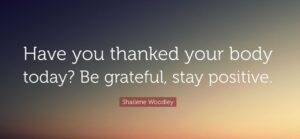
(今天,你感謝自己的身體了嗎?心懷感恩,保持正向。)
Always Say Thank You to Your Body
After entering middle age, I came into contact with at least five different faith traditions. None of these encounters were something I deliberately sought out. Rather, through the workings of circumstance and affinity, certain people and events naturally appeared in my life. It was not until I truly stepped into the field of spiritual practice that I gradually came to realize this: every person who comes into this world is searching for a path home. Life contains a destined route, but it also contains opportunities for choice.
Everyone has a life path of their own. The direction of growth is never the same, and the trials each person encounters are never identical. For me, when I began to truly be with my body, I not only established my life’s vocation, but also gradually found the spiritual ground to which I belong.
I emphasize “being with the body” because I believe intuition comes from the body. More precisely, it comes from the wisdom of the gut. What I mean is that I have truly received messages from my gut, and those messages have guided me toward the right choices.
Of course, what is right for me may not be right for you. Each person’s path of growth and path of accomplishment are different. I respect every person’s faith, and I also respect whether or not you believe in what I call gut wisdom.
Surely, you have had intuitive experiences that went beyond rational judgment. Sometimes, when you look back afterward, you may even find your own astonishing judgment at that moment hard to explain. If we say that such judgment came from the keen discernment of the gut, many people may find it difficult to believe, because from childhood to adulthood, we were almost never taught how to listen to the voice of the body.
When it comes to spiritual insight, many people believe in it deeply. But when it comes to bodily premonition, we often become doubtful. No wonder illness has become such an enormous mystery in modern human life.
The cultivation of the body and the cultivation of the spirit may not be exactly the same concept, yet they meet each other in many deep dimensions. What is even more worthy of reflection is this: bodily cultivation can lay the foundation for spiritual cultivation.
As the concept of the microbiota-gut-brain axis gradually becomes recognized and discussed in the scientific world, the importance of bodily cultivation should also become clearer. The microbiota and the gut, these two major strongholds, are indeed closely connected with the brain through the body’s internal information system. The dimensions of information they are able to grasp are often far beyond what our surface-level cognition can fully understand.
Humanity’s large-scale disconnection from consciousness has long become a form of collective karma. From family education to school education, and then to social education, we have been trained almost all the way through to believe only in the brain’s logical thinking and its judgments of right and wrong.
The Western world did not begin calling intuition “gut feeling” only today. Yet even when we say “gut feeling” with our mouths, when it comes time to make real decisions, we still habitually return to the brain. Perhaps, in the human world, “knowing” and “believing” have always been two unrelated matters.
The body’s messages are a general term, and their source lies in the gut. Conceptually, they also include the flow of information collectively participated in by all the microorganisms within the gut.
Learning to receive the body’s messages is what I call bodily cultivation. A person must be with the body before gradually coming to know what the body is trying to express.
Once a person is truly with the body, believing in the body becomes a kind of faith. Because you have once received the body’s voice, and because you have begun to believe that the body possesses abilities far beyond imagination.
Whenever I hear people discuss the condition of the body, they are often trying to interpret its signals: “Have I been too greedy with food lately?” “Has my old allergic reaction returned?” “Have I been under too much stress recently?”
While making these interpretations, we rarely ask ourselves: “Can I directly trust the body’s ability to handle this?”
Or, from another angle, if we can truly be with the body, is it possible to omit so much repeated judgment, worry, and panic?
What I am describing is, in fact, a loss of position. Because we do not believe in our own body, we keep raising questions. Yet when a person shifts position and truly stands with the body, the words that come out will become: “Thank you. You have worked hard.”
Does saying thank you to the body feel strange to you? Is spiritual practice not the gradual returning of the “I” in brain consciousness back to spiritual consciousness? Bodily cultivation follows the same principle: allow the body to return to its original autonomous operation, and then express gratitude to it.
If you are willing to practice conversing with your body, you may wish to think about this: the body is constantly metabolizing, repairing, eliminating, balancing, and renewing itself. At any moment, expressing gratitude to it is entirely reasonable.
Mutual interaction between people requires respect from both sides. Should the relationship between ourselves and our bodies not be the same?
As for whether the body respects us, that requires us to learn not to disturb it for a period of time, and then observe how it responds.
When your energy field is incompatible with someone else’s, how do you feel it? Is it the brain telling you that person is unpleasant, or is it the body reminding you that you should keep your distance?
Has our subjective consciousness long played the role of suppressing the body’s messages? Do our personal experiences too easily set aside the body’s opinions? Does our logical thinking always neglect the body’s premonitions about space, people, events, and circumstances?
Emotional attachment often becomes a stumbling block to gut wisdom. Different people may coincidentally remind you to be cautious about the same person or the same matter, yet because of emotional attachment, you do not take it seriously. Only when the truth finally comes to light do you suddenly remember that the intuition of others had once reminded you.
At one fasting retreat, all the participants read aloud a confession addressed to their own liver. I personally witnessed a female participant burst into tears on the spot. She truly felt a deep apology toward her liver.
That moment was a moment when the two-way transmission of bodily messages became unobstructed. It was also a moment when the spirit and the body embraced each other. Sincere repentance can be that powerful. It also makes me believe even more deeply that the communication and trust between ourselves and our bodies are absolutely worth the effort.
The daily practice of fasting has led me to move freely through the passages of the body. If, for the time being, you cannot yet go that deeply, you can at least begin with one simple practice: every day, say thank you to your own body.
Thank it for carrying you.
Thank it for repairing you.
Thank it for enduring.
Thank it for never truly giving up on you.
Say it with sincerity and truth. The body will surely receive it.


